

When ICES Colombo Made Excursions Into The Lunatic Fringe
By Darshanie Ratnawalli -May 11, 2014
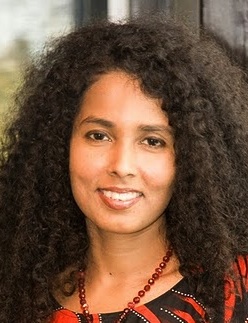
Darshanie Ratnawalli
 Once upon a time, when the International Centre for Ethnic Studies, Colombo was not as respectable as they are now, they commissioned Mr. A. Theva Rajan, currently a member of the Transnational Constituent Assembly of Tamil Elam, to conduct a study on the status of Tamil in Sri Lanka, past and present, as part of an ICES project to promote the official language provisions of the 13th and 16th amendments to the constitution[i]. The Head of ICES during this period was Radhika Coomaraswamy. The study was completed in 1992 and was first published in 1995 (Text) with a foreword by a mysterious personage called the ‘Editor, ICES Colombo’.
An ‘Editor’ is an oddity for ICES, Colombo. All Editors are identified by the relevant ICES journal, every one of which is and has always been published by ICES, Kandy. I have a hunch that ‘Editor, ICES Colombo’ was conjured out of air to stamp a special ICES seal of approval on Mr. Theva Rajan’s paper (making it the second stamp of approval. The first being the distinction of being commissioned).
Mr. Theva Rajan now represents the lunatic fringe of Sri Lankan studies in history. That his comfort zone was firmly in the lunatic fringe, even then, when the ICES was trying to sanitize him via institutional approval, becomes clear by the second page of the first chapter of his paper. Consider this bon mot;
“The earliest Brahmi inscriptions of Sri Lanka are generally said to be in the Prakrit language. Rather than denoting any particular language Prakrit simply means “old language”. To further complicate the matter, among experts terms differ. Where Wilhelm Geiger will prefer to use the term the “Sinhala Prakrit” Senerat Paranavitane will say “old Sinhalese”.”
If the lunatic fringe was an exclusive club, statements like these would be its platinum membership cards, a single utterance conferring premium lifetime membership on its author. Prakrit is an old fashioned term. Far from denoting any old language as Theva Rajan claims, Prakrit exclusively and specifically denotes a Middle Indo Aryan (MIA) language, which is the middle or the second stage of development of Indo Aryan languages. The initial stage, Old Indo Aryan (OIA), is represented by Vedic and Paninian Sanskrit. The present descendants of OIA are the New Indo Aryan (NIA) languages represented by the modern forms of European Gypsy (Roma), Hindi, Kashmiri, Sindhi, Panjabi, Pahari, Nepali, Assamese, Bengali, Oriya, Bihari, Maithili, Bhojpuri, Awadhi, Gujarati, Marathi, Sinhala and Divehi[ii]. Every Indo Aryan language, which lives today as a NIA language has had a MIA or Prakritic phase and an OIA phase.
