

Writing The Truth Is Being Partial According To Sri Lanka And Its Friends!
By Paul Newman -March 27, 2014 |
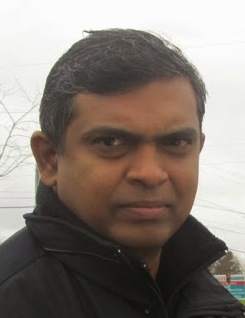
Dr. Paul Newman
 As the UN High Commissioner for Human Rights, Ms. Navi Pillay, a former International Jurist of eminence presented the Introduction of the Report of the Office of the United Nations High Commissioner for Human Rights on promoting reconciliation and accountability in Sri Lanka (A/HRC/25/23), Sri Lanka once again was up in arms calling the report as biased, partial, unwarranted and rejected it.
In her address the High Commissioner stated, “The progress in reconstruction and resettlement of internally displaced persons, elections to the Northern Provincial Council, and in implementing some LLRC recommendations, such as giving effect to the trilingual policy.
We regret to report that there has been little progress in other critical areas identified by the Council in resolution 22/1 and by the LLRC, notably the need to ensure independent and credible investigations into past violations of international human rights and humanitarian law.
Almost five years since the end of the conflict, it is important for the Human Rights Council to recall the magnitude and gravity of the violations alleged to have been committed at that time by the Government and the LTTE, which left thousands of civilians killed, injured or missing. Failure to address the grief and trauma among victims and survivors undermines confidence in the State and reconciliation.
In recent years, the Government has established various mechanisms with the task to investigate past violations. But none have had the independence to be effective or inspire confidence among victims and witnesses”.
The High Commissioner also pointed out that as there were new witnesses emerging and stating that they were prepared to testify against an International mechanism, they should be given a fair chance. It is here one need to impartially analyze that even a sacked Chief Justice of Sri Lanka was not given a fair chance to defend herself. In such a situation how can an ordinary victim belonging to oppressed community expect justice in the domestic process? We also need to remember the scores of Sinhala brethren who disappeared in the 1980s and families do not know the whereabouts of their graves. Read More
