

Sri Lanka’s Third Showdown At UNHRC
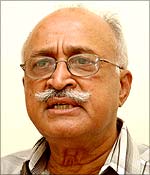
Col. (retd) R.Hariharan
Sri Lanka will face the flak at the 25th session of the UN Human Rights Council (UNHRC) for the third time this week when the US fields its draft resolution on Sri Lanka’s accountability over its conduct during and after the Eelam War. US Secretary of State John Kerry spoke of his country’s keenness to do so as Sri Lanka government “still has not answered basic demands for accountability and reconciliation, where attacks on civil society activists, journalists, and religious minorities sadly, continue.” His comments came after he released the State Department’s annual human rights report for 2013.
He was echoing the UN High Commissioner for Human Rights MrsNavneetham Pillay’s rationale for recommending an international inquiry into war crimes committed by both sides during Eelam War in her draft report released on February 24, 2014. [The advance edited version of her draft report submitted to the UN Human Rights Council is available here ]
Mrs Pillay in her report has put forth powerful arguments to support her recommendations for an impartial international inquiry by including a complete section on “Recent human rights developments” which explains a whole range of concern at the continuing trend in Sri Lanka. These include attacks on freedom of expression, peaceful assembly and association, particularly against human rights defenders, journalists and families of victims, the rising levels of religious intolerance, and continued militarization. According to her these developments have continued to undermine the environment where accountability and reconciliation could be achieved.
The Secretary of State explaining the US stand said, “Our concern about this ongoing situation has led the United States to support another UN Human Rights Council resolution at the March session. We will do so because we know countries that deny human rights and human dignity challenge our interests as well as human interests. But we also know countries that advance those values, those countries that embrace these rights are countries that actually create opportunities.”
UN member nations are usually reluctant to vote for country specific resolutions demanding international probes into internal issues. Usually democratic nations generally have domestic mechanisms to carry out such tasks. Sri Lanka as a functional democracy with all the trappings of good governance would normally be considered as one such country. Apart from issues of real politick, this was one reason that the UNHCR’s two earlier resolutions gave opportunities to Sri Lanka to assume responsibility and implement the recommendations of the Lessons Learnt and Reconciliation Commission (LLRC) report. Read More
