

Geneva, India, And American Imperialism – Part ll
By Izeth Hussain -March 15, 2014
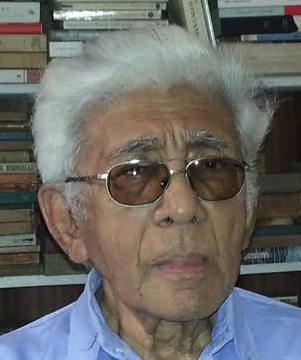
Izeth Hussain
 It should be obvious that the Government has scored a tremendous victory in Geneva. Of course the final vote on the US draft Resolution is yet to come, but I don’t expect any serious reversals. The crucial facts are these: there will be no setting up of a mechanism for international investigations into war crimes and there will be no sanctions against Sri Lanka, both of which had been widely and confidently anticipated. The Tamil diaspora has rejected the draft Resolution, and the TNA has sent its emissaries to Delhi, which can be taken as meaning that the Tamil disappointment with developments in Geneva is comprehensive. So, the blitzkrieg that was to blow Sri Lanka to bits has turned out to be a damp squib.
How was what looks very much like a SL Government triumph achieved? Information about that is not in the public domain. My guess is that there were two factors behind the triumph. One is that India – which as I have argued in earlier articles can be expected to have decisive clout with the US in matters relating to Sri Lanka – got the US to dilute the draft Resolution so that there will be nothing smacking of the punitive against Sri Lanka for another year. The other is the power of the argument – which the Government has taken to emphasizing in recent weeks – that investigations into war crimes will make impossible the spirit of mutual accommodation that is required for progress towards a political solution and ethnic reonciliation, and therefore the investigations will have to be postponed until after the process of ethnic reconciliation takes hold. In this connection I must quote what Archbishop Desmond Tutu said about one of the reasons why the post-apartheid regime did not resort to anything like the Nuremburg trials: “It would also have been counterproductive to devote years to hearing about events that, by their nature, arouse very strong feelings. It would have rocked the boat massively and for too long”. It is beyond my comprehension why the good Archbishop came to support the call for international investigations in the case of Sri Lanka.
However the triumph, if indeed it turns out to be a definitive triumph after the final vote on the US Resolution, is only of a provisional order. In effect Sri Lanka is being put on probation for a year, after which punitive action could follow if SLG fails to take certain measures. Furthermore the range of action required of Sri Lanka has been considerably widened. It now includes action against attacks on the religious minorities, which could possibly become a very big problem by the end of another year. No one can be quite sure what the situation might be by March 2015. We seem to be witnessing the emergence, in addition to the ethnic imbroglio, of yet another one, the Geneva imbroglio. In this situation we must try, just as in the case of the ethnic imbroglio, to get at the fundamentals of the Geneva imbroglio. Read More
