

Why International Pressure Has Become Necessary
By Jehan Perera -January 20, 2014
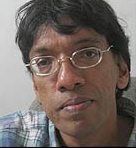
Jehan Perera
 Shortly after the end of the war in 2009, President Rajapaksa declared that in Sri Lanka there would no longer be an ethnic majority or ethnic minorities but only a majority who loved the nation and a minority who were traitors. Apart from the warning inherent in this statement to those who were political dissenters, there was also the implication that a political solution based on the notion of ethnicities and majorities and minorities based upon them would be unnecessary after the defeat of the LTTE. The logic of this position is that a political solution was only discussed because of the pressure of the LTTE, and now with its destruction there was no need to take that discussion forward.
In keeping with the President’s immediate post-war policy statement and despite the passage of nearly five years since the end of the war there has been no fundamental shift in the government’s approach to the ethnic conflict. The talks with the main Tamil opposition party, the TNA, and the government’s effort to form a Parliamentary Select Committee to discuss a political solution has gone nowhere. This is not the government’s failure alone. Nearly all public intellectuals from the Sinhalese community who support the government, which is the politically dominant voice in society, appear to have also taken the cue from the President that there is no ethnic conflict to resolve. But Tamil minority voters have repeatedly challenged this assumption.
So long as there are unresolved ethnic grievances the electorate will tend to vote along ethnic lines. The government’s policy of formulating and promising policies of economic development as an alternative to political reform have been repeatedly rebuffed by the ethnic minority electorate. Not even the personal campaigning by the President himself and the government hierarchy has proven able to turn this vote in the direction of the government. Although the government’s delivery of economic infrastructure development may be appreciated it too was not able to provide the government with the votes of the ethnic minorities either in the North, East or in Colombo where the ethnic minority vote predominates.
