

The Military, The Minorities, And Neo-Fascism
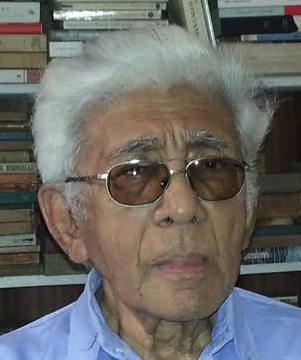
Izeth Hussain
 President Rajapakse will probably go down in history for two achievements: he put down the LTTE rebellion and he has prevented the military coming to power. The first achievement is widely, and correctly, bruited about as the foundation for his enduring popularity with the Sinhala masses. The second achievement – preventing the military coming to power – is not bruited about at all, and perhaps is not even recognized. But it seems to me a major achievement for which the nation has to be grateful, even though it is an achievement of an ambiguous and provisional order. However, that achievement has left him with the dilemma of finding a role for a victorious army in peacetime.
It is arguable that too much credit should not be given to him for the military victory over the LTTE. It was, after all, a military victory, not a civilian one, in which the major role was played by Sarath Fonseka and the soldiers who did the actual fighting, and the major credit should therefore go to them and not to any civilian. Furthermore the President was not a charismatic figure of the order of Churchill who in 1940 transformed Britain’s darkest hour into its finest hour and imbued a nation with the fighting spirit. His detractors would say that he was the average Sri Lankan politician, though endowed with above average cunning, whose primary preoccupation was the feathering of his own nest and that of his relations, with not much more than residual concern for the national interest.
It remains, however, that the war was won under his Presidency, and I believe that he, unlike the previous Presidents, made that victory possible. I must recount at this point what I gathered while I was Ambassador in Moscow from 1995 to 1998. Shortly after I assumed office there the three Chiefs of Staff of our armed forces came to Moscow on arms purchasing missions. They included Major General Daluwatte who later became Army Commander. He said something to the following effect – not in his exact words – which germinated in my mind: “Give us the men and the weapons in sufficient quantity, and we will finish the job”. What that meant quite clearly was that since 1984, which saw the beginning of the civil war, until 1995 our armed forces had not been provided the men and the weapons in the requisite quantity to finish off the LTTE.Read More
