

Law Is King Or King Is Law?
 December 15, 2013
By Sinha Ratnatunga – This is the Sunday Times Editorial - December 15, 2013 -
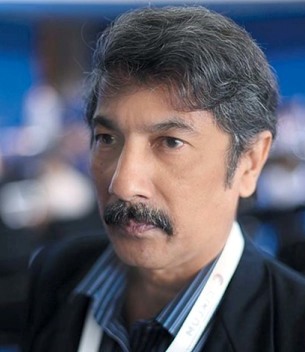
Sinha Ratnatunga – Editor Sunday Times
The legal fraternity, or at least most Colombo-based lawyers and judges, enjoyed a convivial evening on Friday at the annual Voet Lights Society dinner as the year draws to a close. Those present could reflect on the good humoured barbs, especially at the expense of the judiciary. They might be left with the thought if a joke can also be a serious thing.
It was also the end of a year that began in turmoil with the unceremonious impeachment of a sitting Chief Justice and the unease that prevailed in the corridors of justice has not entirely abated. The Chief Justice who was present, ducked speaking at the dinner. Discretion was the better part of valour.
There was surely a sense of regret and disillusionment that the public’s esteem for the Law, the Courts, and for Justice had been so eroded and not wholly due to the conduct of the legal profession. That the administration of justice was slipping into an abyss, and is no longer on the elevated pedestal in which the ‘Nadukara Hamuduruwo’ was once held, is clear today. Every effort has been made to turn the judiciary into a “Government Court” — a mere rubber stamp of the Executive.
Recent appointments by the President have made it crystal clear in the minds of judges, lawyers, litigants and the public that absolute loyalty to the ruling party precedes seniority, experience and competence. Bypassing of senior Court of Appeal judges by ‘high-jumpers’ and ‘long-jumpers’ has left a gaping hole on two counts — (a) the demoralising of independent judges to the point of making them ill, and (b) the creation of a huge void in integrity insofar as the law is concerned.
In a court such as the Supreme Court where “the judgments…. shall, in all cases be final and conclusive” and which has jurisdiction to correct “all errors in fact or law committed by any subordinate court”, there was always, hitherto, the underlying truth that the Judiciary was the last bastion of the citizen and that justice would be rendered at the end of the day; that the principle ‘all are equal before the law and accorded equal protection of the law’ shall prevail. Today, such a lofty expectation is a joke, sad to say. From bribery and corruption to murder and intimidation, and from the misuse of state power to the exploitation of state property, everything is done to pervert the course of justice and protect members of the ruling party while the rest could be thrown to ravenous wolves. And yet, more than 90 per cent of cases that come before these appellate courts are of a non-political nature, just disputes between parties. What is the quality of justice that is meted out, one may well ask.
The 17th Amendment to the Constitution and the Constitutional Court that it provided for, gave a hint of credibility that the seemingly irreversible trend of political interference in the appointment of senior judges could be remedied. The 18th Amendment threw all those good intentions of the Legislature to the winds.
Political interference did not happen overnight; it was a trend that crept in progressively over the years. In 1964, the then Chief Justice Hema Basnayake in his farewell speech complained that conventions that governed the relations between the Supreme Court and the Executive scrupulously observed had seen a departure. His successor M.C. Sansoni was equally unhappy about the “changing scene” (The Supreme Court; the first 185 years by A.R.B. Amarasinghe J.). Victor Tennekoon CJ’s running battles with the then Minister of Justice Felix R. Dias Bandaranaike over the seating arrangements at ceremonial sittings are legendary as was Neville Samarakoon CJ’s ‘clash of the Titans’ with President J.R. Jayewardene and R.S. Wanasundera J’s refusal to sign an undated letter of resignation which cost him the Chief Justiceship under the same President.
