

Did The Commonwealth Summit Backfire On Sri Lanka?

Dr. S. I. Keethaponcalan
Although Commonwealth is an insignificant and inconsequential organization, the Sri Lankan government organized the 2013 Summit in Colombo with great expectations which involved political, economic as well as personal designs. The government expected the Summit to: (1) facilitate greater foreign capital investment in the country, and (2) help mitigate the Western isolation caused by allegations of serious human rights violations during the last phase of the war in 2009.
In terms of the first objective, the government, despite some of the shortcomings, has done a good job showcasing the resources and potentials of the country. One however has to wait and see whether the Commonwealth Summit will fetch more foreign investments. Immediately after the Summit, a news report suggested that the Chinese government has agreed to invest on new projects in Sri Lanka. The reality is that the Chinese do not need the Commonwealth to invest in Sri Lanka. Government and semi-government Chinese institutions are investing in Sri Lanka on a regular basis as Sri Lanka’s leading newspapers report about one or another Chinese project almost every week. Therefore, what we are talking about is non-Chinese, mostly Western investment. Time will tell whether the Sri Lankan Summit boosted foreign investments.
It is the second objective, i.e. beating the Western isolation and international condemnation of serious human rights violations that has become problematic. Some critics believe that the historically low attendance of heads of government in the Colombo Summit was a problem. Only 27 of the 53 countries were represented at the top level, which to a certain extent, would have disappointed the Sri Lankan government. There is however, no concrete evidence to suggest that the decision to send second tier leaders or lower level officials to Colombo by many member states of the Commonwealth was influenced by their attitude towards Sri Lankan. The insignificance of the Commonwealth itself could have been a factor.Read More
Against Duckspeak On Ethnic Reconciliation

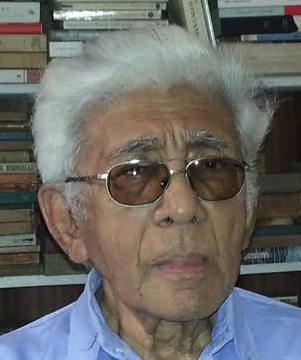
Izeth Hussain
“Duckspeak” is a neologism used by George Orwell in his novel 1984. The rulers of the totalitarian state depicted in the novel dream of reducing the people to automata whose speech will sound like normal human speech but be quite meaningless, inane like the quacking of ducks, since it will be produced only by the larynx without the cerebral cortex coming into action at all. That is Duckspeak. Some readers will hold that Sri Lankan politicians excel in it without being manipulated or coerced by totalitarian rulers, since what they say is usually meaningless. But that is true of politicians all over the world who to varying degrees say meaningless things to fool the people. That however is a voluntary process whereas Duckspeak is involuntary, something uttered by human beings who have been reduced to automata.
That is a preliminary clarification. I will argue in this article that there is a total incompatibility between investigations into alleged war crimes during the final phase of the anti-Eelam war and the process of ethnic reconciliation, and further, that the demand for investigations is a way of pressurizing the Sri Lanka Government into moving towards a political solution of the Tamil ethnic problem. For that purpose I will revisit my article The Ban Ki-moon conspiracy which was published in the Island of May 2, 2011. In that article I postulated what I called “a benign conspiracy” involving the US, Britain, and India, and it seems to me that we are witnessing the further unfolding of that conspiracy. The Government has not recognized that conspiracy. It is therefore glibly talking about holding our own investigations into alleged war crimes and at the same time moving towards ethnic reconciliation. It is so mindless that it amounts to Duckspeak.Read More
