

Beyani’s Report – A Trojan Horse?

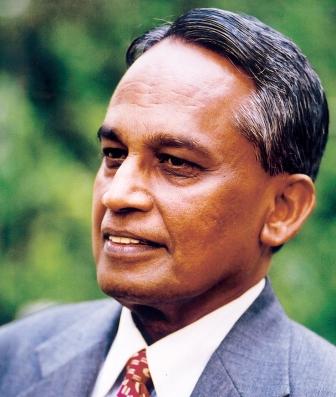
Austin Fernando
I looked at United Nations Rights Specialist Chaloka Beyani’s statement after a friend’s inquiry whether it is a Trojan Horse!
Beyani is an academic from London School of Economics; independent expert. His studies mainly focus on human rights, internally displaced people (IDPs), refugee women’s rights, legalities for protection of rights etc. He did same in Sri Lanka too. Being essentially a human rights exponent his reporting will be rights oriented. His statement was happily quoted by State Media on its praiseworthy references on the government.
Beyani’s reporting
Beyani was here on Government of Sri Lanka (GOSL) invite, according to Minister Mahinda Samarasinghe. Beyani’s statement is important to Sri Lanka, because it is not restricted to the host. It is shared by both friendly and antagonistic internationals and local organizations, as an “on the spot, independent, expert version.”
Beyani concluded: “Constructing a development based strategy for durable solutions for IDPs in Sri Lanka in the aftermath of conflict is now essential.” This is what GOSL constantly claimed she was doing. Indirectly the Framework on Durable Solutions for Internally Displaced justifies this: “IDPs have a right to a durable solution and often need assistance in their efforts.”
Therefore, his statement opening to international standards is understandable: “The IASC (Inter Agency Standing Committee) Framework on Durable Solutions for IDPs, …….is more relevant than ever”, which motivates studying IASC approaches (e.g. Durable Solutions).
Durable Solutions
Since “durable solutions” are his key words, attention is drawn to the criteria determining the extent a ‘durable solution’ had been achieved? The criteria are (a) Long-term safety and security; (b) Enjoyment of an adequate standard of living without discrimination; (c) Access to livelihoods and employment; (d) Effective and accessible mechanisms to restore housing, land and property; (d) Access to personal and other documentation without discrimination; (e) Family reunification; (e) Participation in public affairs without discrimination; (f) Access to effective remedies and justice. One may niche Beyani’s statement under these IASC criteria.
‘Durable solutions’ are also flagged by the Tamil National Alliance (TNA) orchestrating negativism by GOSL, while the opposite is heard from GOSL. Recently in the Parliament TNA Leader R Sampanthan discussed the GOSL on devolving land powers, “Uthuru Wasanthaya” (Northern Spring), attitude towards Northern Provincial Council (NPC) etc and quoted Beyani’s statement on other issues the latter raised, i.e.: “protection of the physical integrity and bodily autonomy of women and girls and their reproductive rights, of children, feasible access to land, and a proportionate balance between justifiable military concerns of national security and freedom of movement and choice of place for IDPs seeking to return to their original places of residence.”
He critiqued the military: “Transparent information on plans to release land currently under military control and withdrawal of the military from all civilian functions would help to find durable solutions for people in conflict-affected areas” and dealt with “some still need access to their original farmland or fishing areas to sustain their livelihood….. growing food-insecurity and indebtedness in the Northern Province, partly due to the lack of sustainable livelihood opportunities.” It appeared that he was unmindful of GOSL’s expressed security concerns or the potential for practical compromises in releasing lands occupied by the military.
Therefore, were these criticisms meant for an unfriendly Parliament or to reinforce internationals preparing for Geneva?
