

Whither Justice? The Proposal For A South African Style TRC In Sri Lanka

Niran Anketell
 As the dust settles on the Commonwealth Heads of Government meeting in Colombo, the press has reported that Sri Lanka may be considering the establishment of a South Africa style Truth and Reconciliation Commission with the assistance of the Commonwealth and the South African government.
As a preliminary observation, however, it is important to note that contemporarySri Lanka and post-apartheid South Africa have vastly different political and social contexts. The South African TRC (SA TRC) model and amnesties were worked out after a formal transfer of power from the regime responsible for the vast majority of crimes under apartheid to the leaders of the liberation struggle. Moreover the dominant religious belief system in South Africa—where Christian rituals of repentance and forgiveness have significant theological resonance—is fundamentally different to the religious beliefs of the majority of Tamil, Sinhala and Muslim victims.
Nevertheless, the SA TRC continues to possess an enduring appeal for Colombo based—as opposed to North and East based—civil society NGOs. Very few, if any, conversations on reconciliation and transitional justice within Colombo civil society networks conclude without references to the SA TRC as the paradigmatic case of the ideal transitional justice model. The Sri Lankan government has also sought to draw parallels between its own attitude to post-conflict justice reflected in the Lessons Learnt and Reconciliation Commission, and the SA TRC.
Read More

 I will call him Jayaseelan because I can’t recall his name (Preposterous but bear with me). Jayaseelan is a Tamil speaking Vadda who is an ex-LTTE fighter. Sometime after 2009, Sunday Divaina had done a story on Jayaseelan. It had captured a retrospective inner conflict going on within the man. Jayaseelan confessed to asking himself the question, “I am a Vadda. Why did I fight for a separate Tamil state?” However, that was not what made the story stick in my mind. Jayaseelan had a grandfather who, while recounting the history of their community in the area, had let drop, almost casually, that they were Bandara Vannia’s[i] people.
Memories Of The Wanni; The Vaddas And The Vanniyas
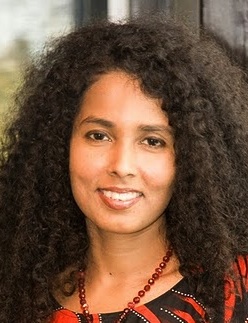
Darshanie Ratnawalli
I will call him Jayaseelan because I can’t recall his name (Preposterous but bear with me). Jayaseelan is a Tamil speaking Vadda who is an ex-LTTE fighter. Sometime after 2009, Sunday Divaina had done a story on Jayaseelan. It had captured a retrospective inner conflict going on within the man. Jayaseelan confessed to asking himself the question, “I am a Vadda. Why did I fight for a separate Tamil state?” However, that was not what made the story stick in my mind. Jayaseelan had a grandfather who, while recounting the history of their community in the area, had let drop, almost casually, that they were Bandara Vannia’s[i] people.
Sharing the Wanni like they did the Vaddas and Vanniyas intermingled in interesting ways. They married each other, transformed into each other, and became “ruler” and the “ruled over” to each other in unidirectional ways with the Vanniyas ruling over bands of Vaddas. They even came to resemble each other in ways that caused certain 19th century British administrators to suspect a relationship[ii] (S. Fowler, Diary of 3rd May 1887).
In Sinhala consciousness of living memory the term “wanniya” (closed vowel) is a geographic term inalienably bound-up with “wanaya” and “wanantharaya” (meaning forest). “Wanni wanantharaya”, “wanni mukalana”, “hadda wanniya”, “heethala wanniya” are colloquial Sinhalese usages carrying strong subliminal associations of the Vadda. The Vaddas are of course carriers of the name “wanniyalettho”, the present Vadi chieftain being “Uruwarige Wanniyalettho”.
For Sri Lanka, the period between the 13th and 17th centuries was a time of resurgence and recovery. In-migrations were orchestrated from Bengal and diverse parts of South India. There were irrigation works to restore and de populated regions to reclaim. “The involvement of the Sinhala-dominated states in this process of in-migration is demonstrated in several sources.”- (Roberts: 2004, p72). South India, the source of most of these in-migrations was a land which had a well established Vanniya tradition. The earliest references to the Vanniya in South India predate Lankan references and go back to the 11th century inscriptions of the Colas. The earliest South Indian mention is the word “vanniya parru” occurring in the “inscription No. 556 of 1919, which appears to belong to the time of Rajaraja I (985-1014)”.-(Indrapala, 1970[iii]). “Vanniya-parru” means vanniya holding (ibid) and seems to find a corresponding echo in the Sinhalese term “vanni peruven” found in “Vanni Bandara Vitti Potak: Rate Attange Niti kandaya”. This manuscript, (Or 6606-182) in the Hugh Nevill Collection contains the Sinhalese folk historical tradition about the arrival of first immigrant group in the wanni region of Lanka and says that these seven “malavara” chieftains came from Kumara-valiyen (princely clan) ); Bndara-valiyen (from the families of dignitaries); and from Vanni-Peruven (Vanni class of Vanni land).-(D.G.B 1996[iv]).
