

Whither Higher Education?
By Sumanasiri Liyanage -November 9, 2013 |
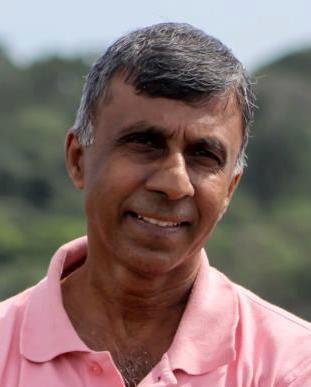
Sumanasiri Liyanage
 Crisis is a strong word that I prefer to avoid using although many tend to use it to describe any dis-equilibrium. When a situation is in a crisis, it means the direction towards which the situation would develop may not be predicted. This seems to be similar to a situation when medical practitioners describe ‘critical’. Nonetheless, social systems may go through a prolonged period of crisis with no radical transformation for multiple reasons. I believe the Sri Lankan education is in a prolonged crisis. Solutions that were introduced by the government as well as university system in the past and that are being tried today are not based on a serious diagnosis of the situation that in turn caused to generate the present prolonged crisis in education. A survey on education by Transparency International has revealed that education has been one of the most corrupt sectors in Sri Lanka. However, my attention here is not education in general but higher education. Many seem to believe that the present situation is primarily due to lack of adequate resources. The government tends to think that bringing in private capital would resolve this crisis of resource inadequacy. The Federation of University Teachers proposes that increasing the government expenditure to 6 per cent of the GDP would be a solution. I accept that the public expenditure on education is not adequate and it is even less than what the government spent on education in the pre-1977 liberalization phase. However, I submit that the prolonged crisis of education should not be reduced to the issue of lack of resources. In the present situation, mere increasing resources would not be a solution to this multi-faceted crisis. Let me give an example. Some years ago, the universities except medical faculties introduced semester and continuous assessment system with the argument that it would raise the quality of the degree. In my view, it is an utter failure in social science and humanities and become a mere weapon of disciplining students. Do we teachers need to review this system? So crisis is within as well as without. It is in this context, the Ministry of Higher Education has been trying to establish private universities. I have no objection to setting up of private universities per se if that comes under and within a national plan of higher education that ensure not state but public/social control. Nevertheless, if that suggestion comes as a part of a plan of commodification of higher education, it should be resisted.
Read More
To Whitewash Regime’s Sins UGC Arbitrary Decides To Close Universities
November 9, 2013 |
“We are extremely displeased with the arbitrary decision of the UGC to announce a ‘vacation’ for universities during the CHOGM. We are not at all convinced by the reasons provided by the UGC Chair for this sudden decision.” says the President of the FUTA, Dr. Nirmal Ranjith Dewasiri.
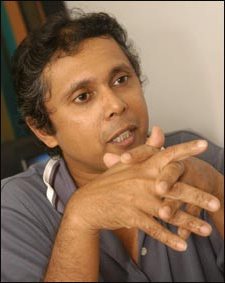
Dr. Nirmal Ranjith Dewasiri
Issuing a statement he says; “There is no justification for disrupting the academic activities of several thousand students in this way. In fact, we believe this arbitrary decision was taken due to the insecurity and fear of those in authority generated by their sustained failure to address the needs of university students in this country. This is part of the general programme of deception that has been launched by this regime to use the CHOGM to whitewash its sins at considerable cost and inconvenience to its citizens.”
We publish below the statement in full;
FUTA Statement on closure of universities for CHOGM
In a move that definitively indicates that the regime has lost all sense of proportion, sense and logic in the whirlwind of CHOGM-mania, yesterday the University Grants Commission (UGC) announced a vacation for universities from the 9th to the 17th of November. UGC Chair Prof Kshanika Hiriburegama was reported by the media as having explained the vacation being declared due to numerous requests from undergraduates participating in CHOGM activities who did not want their academic activities to be disrupted. According to another media source, Prof Hiriburegama reportedly granted the vacation so that university students could ‘study’ about CHOGM.
