

Sri Lanka’s Twitter Troll Diplomat

Eric Ellis
Mr Bandula Jayasekara is Sri Lanka’s Consul General in Sydney, or, as he likes to style himself, the island nation’s “Ambassador” in Australia.
Jayasekara is indeed one of his government’s highest-profile officials abroad, as he represents Colombo in a country of importance to Sri Lankans. In the West, only Britain, Canada and France have more Lankans making those nations their refuge than does Australia.
But the delicate dance of manners and language that is international diplomacy seems to have eluded Jayasekara in ambassador training college back home in Colombo.
Little of what this ‘diplomat’ says and does could be regarded as diplomatic. Statesmanlike he is not. Recidivist Twitter troll might seem a closer approximation.
As Sri Lanka’s strongman President Mahinda Rajapaksa, Jayasekara’s boss, has said as he prepares to host the prestigious Commonwealth Heads of Government Meeting (CHOGM) this week, he regards social media as a “disease”.
Read more
Towards Reconciliation
By Rajiva Wijesinha -November 15, 2013 |
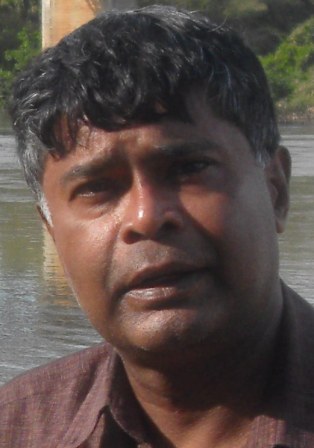
Prof. Rajiva Wijesinha MP
 Four years after the conclusion of conflict, Sri Lanka still has a long way to go to achieve Reconciliation. This is unfortunate, given the enormous efforts made by government to improve facilities for the people most affected by war. But it is not surprising that, as indicated by the results of the last election held in the Northern Province, we have failed to win hearts and minds.
That would not have been difficult had a concerted effort been made. But this requires planning, and unfortunately planning is not something Sri Lanka has been good at. For over three decades now, we have tended to respond to events or rather to crises. The one exception was the care with which, in the period after 2005, we approached the conflict, with all branches of government working together and care taken to ensure the dissemination of clear and convincing information. Following the conclusion of the conflict however all that broke down, and propaganda, often based on parochial electoral considerations, took over, with little attempt at intelligent analysis of ground realities.
Thus we seemed to believe that reconstruction alone would suffice, and reconstruction that placed a premium on cement rather than people. This is on par with the worst delusions of capitalism as elevated into a political philosophy, the assumption that prosperity will trickle down. But this does not work, and Sri Lanka may in the end have to pay heavily for the failure to conceptualize with sensitivity of those who took on responsibility only for construction and not for consultation, who concentrated only on resettlement and not rather on restoration.
