Peace for the World

Peace for the World
First democratic leader of Justice the Godfather of the Sri Lankan Tamil Struggle: Honourable Samuel James Veluppillai Chelvanayakam

Thursday, January 31, 2019

Bloomberg quotes Mahendran on Deutsche Bank alleged money laundering case


PANEETHA AMERESEKERE-JAN 31 2019

Former Central Bank of Sri Lanka Governor Arjuna Mahendran had reportedly offered his opinion to Bloomberg, in reference to a proposed investment by Qatar in the German based Deutsche Bank.
Bloomberg, in a story dated 28 January, quoting Mahendran on the proposed investment, said,

‘There’s a potential liability ahead in case the Bank is fined by the regulators in the United States (U.S.) for those accusations of money laundering. The fear is that you can’t quantify the fine, that’s the known unknown. So they may do both, get the Qataris to put in some equity and merge with another German based bank 'Commerzbank', to fill any holes created by having to pay the anticipated fine’.

Deutsche Bank is presently accused by the U.S. Authorities of money laundering.

How and why perceptions count – and corrupt

SAME OLD THING: Despite the institutional strengthening of anticorruption agencies following the 19th Amendment, consistent failure in implementation has led to very limited progress in arresting and reversing corrupt trends in Sri Lanka. So it’s no surprise that in terms of being perceived as a corrupt state, our island-nation has made little if any progress in terms of global perceptions
logo Friday, 1 February 2019

Much has been made of it. If you haven’t heard about CPI 2018, you’re probably living under a rock. And if you don’t want to see what creepy-crawlies dwell there alongside a pure in heart you, don’t pick it – the rock, or CPI 2018 – up.

But for those of us who like to know, the latest edition of the Corruption Perceptions Index (CPI) makes fascinating – if disappointing – reading. For those of us who follow Sri Lanka’s progress – or otherwise – on it, it’s an essential insight into how well we’re doing overall (we’re not). And if Transparency International’s rankings can be taken at face value, our island-nation has miles to go before we sleep.

It’s probably because many promises have been made – on the campaign trail and in parliament among other corridors of power – that we have yet to keep. For one: to bring sundry culprits from a previous regime to book in a transparent manner. For another: to ensure that the introduction of good governance into the administrative milieu would keep present powers accountable. For posterity: to drive the reforms agenda whereby the seeds of a new political culture would be sown in notoriously hard soil.

By the way

For now, it seems that those seeds – and Sri Lanka’s seeding in terms of how corrupt it is perceived to be – have fallen by the wayside. Though where once (2016) we were ranked 95th of 176, today we’re in 89th place with a score of 38 on an index where 0 is ‘highly corrupt’ and 100 is ‘very clean’. Last year, we had the same score (91st of 180 ranked countries). And our failure to improve our score despite a slightly higher ranking means that Sri Lanka may be as beautiful as Bali on Lonely Planet’s 2019 brochure. But we swim with the likes of Swaziland (90/180) on TI’s CPI 2018, where the average global country score is 43 and South Asia’s is 44. (In general, TI says most countries worldwide have failed to stem or stymie leave alone reverse the tide of corruption.)

While we’re nowhere near as bad as Somalia (score 10), Syria and South Sudan (both at 13), Sri Lanka is perceived as being the third most corrupt country in South Asia after Bhutan (25th of 100) and India (78/100). Sri Lanka averaged 83.53 from 2002 until 2018, reaching an all-time high of 97 in 2009 – the year our 26-year war ended and a record low of 52 in 2002… another year of political turmoil when CBK pulled the plug on the then UNP’s Govt. In more recent times, our country score has ranged from 32 in 2010 (rank 91 of 178) to 40 (2012). In the main, we bobbed about in the 37-38 score range in 2013-14-15.

All right-y then! So what does this all have to do with the price of eggs?

Bad eggs

One thing we must keep in mind is that the index is based on perceptions, which have a tenuous (if tenaciously researched) link to reality. TI tells us that CPI deals with “perceived levels of public sector corruption”, adding that “as such, the existence of a legislative framework – without the will or operational ability to ensure timely justice – reflects on Sri Lanka’s clear lack of progress to date.”

Its Sri Lankan chapter chief elaborates: “With the likely conclusion of several high-profile corruption cases in 2019, it is essential that all authorities uphold their impartiality and independence. If the application of the law is interpreted as selective or politically motivated, it could prove detrimental to the anti-corruption drive and the justice system.”

Still, what of the price of eggs in our island republic?
Basket case
An important conclusion to reach might be – as Transparency International itself has inferred – is there is a link between corruption and the health of nation-states. So-called ‘full democracies’ tend to score an average of 75 on the CPI, more towards to the ‘clean’ end of the perceptions spectrum. Those defined by TI as ‘flawed democracies’ rack up an average score of 49. And ‘hybrid regimes’ – a mix of democracy with elements of authoritarianism – score in the range of 35. (Autocratic regimes register average scores of 30 or so on the CPI.) So the think tank version of Sri Lanka’s CPI score plunks it between a flawed democracy and a hybrid regime. Tell us about it, TI!

If the CPI suggests that it’s time to make “real progress against corruption and strengthen democracy around the world”, TI’s call on all governments to strengthen vigorous checks and balances over political power, and ensure the ability of democratic institutions to operate without intimidation, is timely. In fact, the watchdog in tandem with civil society has been agitating for anticorruption legislation, practice and enforcement since our war of nearly three decades ended 10 years ago.
Fickle bureaucracy
We in the Fourth Estate must also nod to TI’s desire to support a free media milieu by ensuring the safety of journalists and their ability to work without intimidation of any ilk. The organization’s call to support civil society institutions, which facilitate critical political engagement and public oversight over government spending, particularly at the local level, is also salutary in terms of arresting alarming trends in how the state sector is perceived.

We endorse them, and can add a few more mirrors in which to reflect back at the Berlin-based ‘anticorruption coalition’ (as it styles itself) our own perception of state/national corruption. Be TI’s yardsticks for measuring corruption as they may – a rigorous methodology bolstered by meticulous research – we have our own gauges. It is far more fly-by-wire than any index. But perhaps far more perceptive and insightful! And rather than a rank or score, it is a finger – index or otherwise – that we use to show our corrupt bureaucrats and politicos what we think of them…
Failed statesmen
For as long as presidents declare egregious street-level warfare on drug pushers but pal up to traffickers in minister and mandarin ranks, perceptions of high-level national corruption will remain rife. And as long as prime ministers who promised to introduce and sustain a new political culture hobnob with goblins allegedly culpable of genocide and gremlins guilty of murder and grand larceny at public events, perceptions of corruption will dismay the sea-green incorruptible civil society champions who still mouth platitudes about Mr Clean. And the less said about how leftover cheats, thieves and robbers from previous regimes still seem to be at large, to pursue life, liberty and happiness, the better – it seems.

In fact, for as long as progressive legal reforms such as giving citizens the right to freely access asset declarations of public representatives (vide RTI) and the National Audit Bill fail to deliver – at least in terms of raising Sri Lanka’s anticorruption profile – we’ll be left holding the baby of a lack of bureaucratic probity and also think political will has been thrown out with the bathwater.

That is probably why TI’s Sri Lanka chief said last year after CPI 2017 was released: “It would seem that the anticorruption drive has limited momentum.” We wouldn’t be surprised if he repeated himself in 2019. And CPI 2018 – for all its rigour – is only the tip of the iceberg.

We know! think! suspect! that the rot runs rather deeper than that. It is time to dig, expose, uncover. The inauguration of a centre for investigative journalism in Sri Lanka in the same week as the CPI was released harbours some hope in this respect. Sure there’s miles to go but it seems some old hacks and serious journalists are not going to sleep soon… unless it’s with the fishes. So once more into the breach to close the wall and bridge that gap!

(Journalist | Editor-at-large of LMD | Writer #SpeakingTruthToPower)

The Days We Screamed


01/31/2019
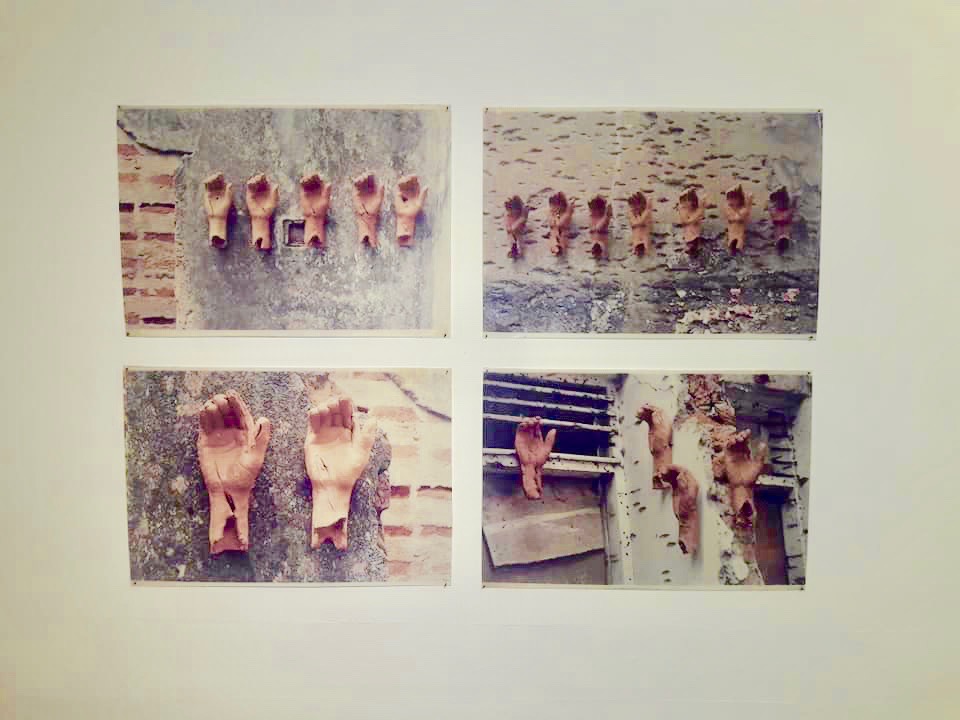
Yes, we screamed. Mostly out of fear. At times, in joy when the opposing side faced more loss than us. Lives were taken for granted, numbers of the fallen mattered much more than lives saved, on both sides. There were arguments, hate speech even among friends. This emotion was reflected in the art scene as well. The exhibition “The days we Screamed” brings together paintings and artworks by then young artists who gave artistic expression to the period we lived through.
Initially artists like ACGS Amarasekara who followed the Victorian style mainly concentrated on landscape and portraits. This trend underwent a drastic change with the emergence of the “43 group” who introduced Parisian modernity into Sri Lankan art. However, the art remained figurative and representational in nature. The subject matter dealt by the members of the ’43 group was similar to that of their predecessors – landscapes, portraits and village scenery.
This situation underwent a change with the emergence of H.A. Karunaratne as an influential artist with his skills acquired from New York. This effect was witnessed in the 1960’s as the non-figurative tradition of painting established itself as a way of expressing “spirituality” in Sri Lankan modern art. This trend had great appeal among the people who were conditioned by the Buddhist philosophy. Though Karunaratne’s art practice had great relevance to Sri Lankan context in terms of its spiritual inclination, it failed to reflect the increasing anxiety and stresses that was gradually engulfing the Sri Lankan social life.
In the early 1970’s Sri Lankan political landscape started changing with violence becoming an integral part of society and politics. The first JVP insurrection of the early 1970s followed by post-election violence in 1977 and the racial riots of the late 70’s foretold the violence that was to be unleashed over this island nation in the years to come. Though in the field of theatre these gradual changes were assimilated, visual artists remained seemingly immune to all the violence that was creeping into social life in Sri Lanka.
The early 1980s saw the worsening of ethnic divides and the start of armed conflict between the JVP, the LTTE and the state. Even in this political turmoil, the art of the 1980s did not reflect the changing socio-political environment. However, a younger generation of students who were witnessing all these changes came to the forefront in the early 90’s. Jagath Weerasinghe’s 1992 exhibition “Anxiety” marked a turning point in the visual art scene in Sri Lanka.
With this, a young generation of artists who were independent, flexible and energetic started using ancient and contemporary idioms with social consciousness. Their art showed the possibility of making art with multiple layers of cultural and social meaning. In their hands art assumed new dimensions, beyond being a medium of pure entertainment and enjoyment.
This period also introduced new forms of expression in visual arts which were hitherto unknown to the gallery-going public of Sri Lanka. Installation art and performance art became powerful medium for these artists to express their ideas.
Artists who were at the forefront of this change included Jagath Weerasinghe, Chandraguptha Thenuwara, Kingsley Gunatilake, Anoli Perera, Muhammad Cader, Godwin Constantine, Pradeep Chandrasiri, Pushpakumara Koralagedara, Bandu Manammperi and T Shanaathanan. There were younger artists who followed the same lines later.
Jagath Weerasinghe’s paintings centred mainly around distorted male figures expressing anguish and despair of the period. His exhibition “Yantragala” used traditional motifs to express contemporary issues. His innovative approach in art inspired many young artists and art students.
Thenuwara’s art practice consisted of socially and politically integrated subject matters. His art works reflect political conflict, disasters, and the social and economic hardship our people have gone through and are still going through. Thenuwara’s life experiences along with his training in Moscow moulded him into a socially engaged art activist. His camouflage painting and barrel installations have become unique symbols of Sri Lankan ethnic war.
One of the notable female artists from this period is Anoli Perera. Though Sri Lanka has a long history of producing many leading female artists Anoli stands out in fusing ancient and modern idioms to express the double burden (domestic and political) experienced by Sri Lankan women.
Kingsley Gunatilake has used his exuberant palate to produce Greenbergian-type canvases. However, his strength lies in his powerful installation work. Kingsley can be regarded as a unique artist who used the maximum expressive potential of installation art in Sri Lanka.
The art scene of the 1990s also saw the emergence of performance art. The author’s first performance “Broken Palmyrah” was in 1994. This trend was followed by Bandu Mannamperi and other younger artists later.
Editor’s Note: “The Days We Screamed” is an exhibition which brings together art work by this generation of artists. This exhibition is at the Theertha “Red Dot Gallery” in Borella, and will be open to the public from the 26th of January to the 1st of February.

Hang them not, or hang them?


Friday, February 1, 2019

While President Maithripala Sirisena reiterated very sternly that he would carry out the death penalty for major convicted drug offences who continue the illicit drug trade while in the death cell. He declared that he had entrusted the Armed Forces, Police and the Civil Defence Force with the task of eradicating the narcotics menace the way they had destroyed the LTTE.

While the President’s decision to carry out the fight against drugs on a war footing did not face any adverse response, some human rights activists expressed alarm about his references to the strong arm tactics adopted successfully by President Duterte of the Philippines.


Furthermore, the Committee for Protecting the Rights of Prisoners (CPRP) came out with a most surprising statement that they would take legal action if there was a move to arbitrarily execute persons convicted of drug related offences, who are found repeating such offences during imprisonment. However, CPRP Chairman Senaka Perera’s argument against execution falls flat by his own logic that the prisoners should be given a chance to correct their criminal ways. "rehabilitation where the wrongdoers are afforded an opportunity to rectify themselves is the solution. This shows respect for human rights,” Perera asserted.

Drug offenders

The CPRP seems to have forgotten the fact that President Sirisena’s proposal is to carry out execution for the drug offenders who continue their criminal drug trading while in prison. If these criminals carry out drug smuggling while in prison, it is very clear that these criminals do not have any desire to rectify their errant ways and become good citizens.

“Students are the main target of narcotic dealers and therefore we conduct awareness programmes in schools,” President Sirisena said adding that when the National drug Eradication Week was announced a student had questioned whether the drug menace could be eradicated within one week.”
Schoolchildren are the main target of drug traffickers and the Presidential Task Force carried out dangerous drug awareness campaigns in 51 schools in Matara district this week. The President, who attended an awareness programme at the Ruhuna University, presented certificates of appreciation to the best contributors to the drug eradication campaign. The University of Ruhuna received a cash award for establishing a research unit for eradicating narcotics.

CPRP Secretary blamed Parliamentarians and drug barons for importing drugs into the country and charged that, “President Sirisena, despite being the first citizen of a democracy, which has human rights obligations as per international conventions, entered into a war in favour of the inhumane hangman’s noose”.

The CPRP cannot be ignorant that those who continue drug trade behind prison walls are drug barons who were caught with hundreds of kilos of narcotic drugs worth millions of rupees. President Sirisena said very clearly that his intention is to execute few large scale drug dealers who continue drug smuggling from their death cells. In other words one or two drug barons will face hangman’s noose and not minor offenders. If any Parliamentarians are involved in drug smuggling – there very well could be few judging by the anti-social tendencies display by few MPs – it is for the police to investigate and bring the offenders to book. The learned CPRP office-bearers should understand that President Sirisena cannot be expected to hang MPs without a conviction by the court.

President Sirisena referred to those who ridicule the national programmes for drug eradication. Without mincing words he said that whatever said and done, he strongly believe that those who are trying to deplore these activities have some connection with drug trafficking. Whatever the guise they use, it is clear that the people who try to ridicule the drug eradication programmes are under the control of narcotics drug dealers. The drug barons have unlimited funds to buy people and they are even powerful enough to topple governments.

New programmes

The President said while continuing the programmes that are being implemented to control and eradicate illicit drugs, new set of programmes will also be launched within the next few months aiming at the schoolchildren and public servants to further strengthen the fight against drugs.

He added that the fight against drugs will be carried out on a war footing, similar to the war to defeat LTTE terrorism.

The President said that he is determined to carry out capital punishment for repeated drug offenders. Pointing out that certain forces with an agenda carry out campaigns against the Theravada Buddhist Philosophy, the President said that the illicit drugs are also a part of a major coup of certain organised groups to destroy the country. Under these circumstances, it is essential to take stern decisions and it is the duty of everybody to join hands in the campaign to eradicate drugs, the President emphasized.

This 13th programme in Matara is the district meetings of the “Mathin Nidahas Ratak” conducted under the instructions of President Maithripala Sirisena and operated under the Presidential Task Force Drugs Prevention. A broad set of programmes were held centering Matara district in the late October. Under that, all the districts were covered and 650 rural programmes were held at Grama Sevaka division level and the officers and the public were made aware of the programme. An awareness programme was conducted covering 51 schools of five regions in collaboration of the Navy and Air Force.

Wednesday, January 30, 2019

Palestinian girl fatally shot at Israeli checkpoint

Israeli forces killed a Palestinian girl at al-Zaayim checkpoint in the occupied West Bank east of Jerusalem on Wednesday.
Ali Abunimah Rights and Accountability 30 January 2019

Israeli police claimed that Samah Zuhair Mubarak attempted to stab a security guard at the checkpoint before she was fatally shot.
The Palestinian Authority health ministry gave Mubarak’s age as 16, and media reported she was in the 11th grade.
No Israeli soldiers were injured during the incident, as in many previous cases in which an alleged Palestinian attacker was killed.
An Israeli police spokesperson tweeted a photo of the knife he claimed Mubarak had carried:


Female terrorist armed with knife attempted to stab security personal at security crossing azaim, Jerusalem. Terrorist shot. Units at scene.
Israeli police also released an edited video said to show parts of the incident.

The video shows a person wearing all black and carrying a backpack approaching the checkpoint.

It then shows an altercation from a distance in which a person appears to stumble or lunge forward, and then fall backwards onto the ground as if shot.
The video is edited such that it does not show what happened in the seconds prior to the altercation and shooting.
It also shows a soldier handcuffing the clearly incapacitated Mubarak who is lying on the ground while another soldier points a rifle at her.

Medical aid denied

In many cases of alleged or actual attacks by Palestinians against Israeli soldiers, occupation forces have habitually used unnecessary lethal force – extrajudicial executions – against persons who presented no imminent threat or had ceased to present a danger.
“In some cases, Israeli officials have said Palestinians appeared to have carried out attacks or attempted to do so in order to be shot dead by Israeli security forces, as a form of ‘suicide by cop,’” the Times of Israel statedafter Wednesday’s shooting.
Local media reported that Israeli forces prevented first responders from providing first aid to Mubarak after she was shot.
None of the images released by Israeli police or those circulating on social media and seen by The Electronic Intifada appear to show any examination of Mubarak by medical personnel or life-saving efforts taking place.
Medical care is habitually denied or actively prevented for Palestinians shot by Israeli occupation forces.
In reference to such incidents in the past, Amnesty International has stated that it is “a basic duty under international law to provide medical aid to the wounded, and failure to do so – especially intentional failure – violates the prohibition on torture and other cruel, inhuman and degrading punishment.”
This video shows soldiers looking through Mubarak’s school bag after she was shot and finding only school books:

Family shocked

A family member told Palestinian media that following the killing of Mubarak, Israel detained her father Zuhair Mubarak after summoning him for interrogation at Ofer military prison.
“We knew that Samah was going to school, and we were surprised by the news of her death. We do not know any other details about what had happened at the checkpoint.” the family member added.
Mubarak’s family is originally from the Gaza Strip, but lives in the occupied West Bank town of al-Ram, north of Jerusalem, where her father moved at the age of 18.
She is the third Palestinian child to be killed by Israeli forces since the beginning of 2019.
“Samah has a childish personality, she has no extremist thought or ideology, she comes from a religious family, we are all religious, and she would not do what Israel claims,” Samah’s uncle, Fathi al-Khalidi, told the publication Donia al-Watan.

Fatal tear gas canister

Meanwhile in Gaza on Tuesday, 47-year-old Samir Ghazi al-Nabbahin died from injuries he suffered during Great March of Return protests last Friday.
The Palestinian health ministry in Gaza said that al-Nabbahin was hit in the face with a tear gas canister fired by Israeli occupation forces.
On 14 January, another Palestinian in Gaza, 13-year-old Abd al-Raouf Ismail Salha, died from injuriessustained when he was shot in the head by an Israeli tear gas canister days earlier.
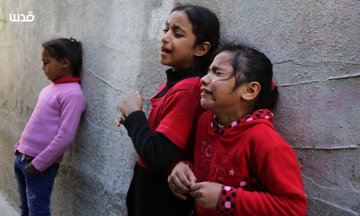
Al-Nabbahin was buried on Wednesday amid scenes of anguish:

View image on TwitterView image on TwitterView image on Twitter

قطاع يودع الشهيد سمير النباهين (47) عاماً والذي ارتقى بعد إصابته بقنبلة غاز بالرأس أطلقها الاحتلال شرق البريج.


View image on TwitterView image on TwitterView image on Twitter

بكاء أطفال الشهيد سمير النباهين خلال وداعه وتشييعه وسط قطاع اليوم.
At least five more Palestinians were injured by Israeli gunfire on Tuesday as they participated in a weekly march in the north of Gaza against Israel’s maritime blockade of the territory.
Tamara Nassar contributed research.

U.S. Intervention Could Be Maduro’s Lifeline

Attempts at regime change have backfired on Washington before.

Members of the Bolivarian National Police (PNB) line up to guard the entrance of Venezuela's Central University (UCV) in Caracas, during a protest against the government of President Nicolas Maduro on January 30, 2019. (LUIS ROBAYO/AFP/Getty Images)Members of the Bolivarian National Police (PNB) line up to guard the entrance of Venezuela's Central University (UCV) in Caracas, during a protest against the government of President Nicolas Maduro on January 30, 2019. (LUIS ROBAYO/AFP/Getty Images)

No photo description available.
BY 
| 
Once one of Latin America’s longest-running democracies and the country with the largest proven crude oil reserves in the world, Venezuela has been driven to the brink of collapse by years of economic mismanagement, rampant corruption, and mounting authoritarianism by President Nicolás Maduro’s government.

Starvation and malnutrition are now widespread. Years of recklessly printing money have rendered Venezuela’s currency practically worthless. Hyperinflation reached 1.3 million percent last year and could reach 10 million percent this year, according to the International Monetary Fund. More than 3 million Venezuelans have already fled the country in Latin America’s largest-ever refugee exodus, sparking humanitarian crises in neighboring states. On Jan. 23, U.S. President Donald Trump declared that “all options are on the table” if Maduro used force to put down the protests that have swept the country in the last few weeks.

But the prospects for a change of regime in Venezuela look dicey, especially one driven from D.C. While two dozen countries have followed the United States’ lead and recognized the opposition leader Juan Guaidó as Venezuela’s interim president, there are good reasons to be wary of Washington’s latest moves. The U.S. history of attempted regime change in the region and Trump’s loose language are both working against an opposition that faces a still formidable foe in Maduro’s regime.

According to the Wall Street Journal, Guaidó coordinated his announcement with the United States beforehand as part of a concerted effort by the United States and its Latin American allies to force Maduro out. The Trump administration appears to have been debating regime change in Caracas for some time. In August 2017, Trump surprised the Pentagon by announcing that a “military option” was on the table for Venezuela—a claim he allegedly repeated to several alarmed South American leaders a few weeks later. In September 2018, the New York Times reported that Trump administration officials had met with disgruntled Venezuelan military officers multiple times to discuss the possibility of a coup. Although Washington ultimately decided not to support the coup plotters, Maduro jumped on the story and continues to blame the United States for his country’s political upheaval.

This highlights the dangers of the Trump administration’s loose language when it comes to regime change. While administration officials may see regime change as a morally sound response to the humanitarian crisis unfolding within Venezuela, many in the region are skeptical of Washington’s intentions—for understandable reasons.

When Maduro warned his supporters last week “don’t trust the gringos,” he evoked a long history of U.S. meddling in Latin America dating back to the Monroe Doctrine of 1823. Gunboat diplomacy drove U.S. policy in the early 20th century. Indeed, as the historian Greg Grandin once summarized, “by 1930, Washington had sent gunboats into Latin American ports over six thousand times, invaded Cuba, Mexico (again), Guatemala, and Honduras, fought protracted guerilla wars in the Dominican Republic, Nicaragua, and Haiti, annexed Puerto Rico, and taken a piece of Colombia to create both the Panamanian nation and the Panama Canal.”

The academic literature on regime changes paints an overwhelmingly negative picture of the prospects of success: Studies have shown that foreign-imposed regime changes do not improve political or economic relations between the intervening and target states. They rarely lead to democracy, and, regardless of whether they are conducted covertly or overtly, they increase the likelihood that the target state will experience a civil war.

Yet however ineffective a tool regime change has been, it’s one that the United States has often resorted to. Following World War II, covert action replaced gunboat diplomacy as its preferred form of intervention in the hemisphere. For instance, my recently released book, Covert Regime Change: America’s Secret Cold War, documents 18 U.S.-backed covert regime change attempts in Latin America during the Cold War—10 of which saw U.S.-backed forces assume power. Because Washington’s role in most of these missions was quickly exposed, many of these covert operations have become lasting symbols of U.S. imperialism in the region: the 1954 Guatemalan coup that ousted the democratically elected leader Jacobo Árbenz, the 1961 failed Bay of Pigs invasion, the 1964 Brazilian military coup, the 1973 Chilean coup that gave rise to Augusto Pinochet’s military regime, and the Reagan administration’s support for anti-Sandinista forces in Nicaragua.

In April 2002, Maduro’s predecessor and mentor, Hugo Chávez, was ousted for two days in a military coup before regaining power. Afterward, Chávez accused the United States of playing a role in the coup and later claimed that the United States was trying to assassinate him. (Declassified U.S. government documents later revealed that while the CIA was aware of the 2002 coup beforehand, Washington did not back the coup and instead issued “repeated warnings that the United States will not support any extraconstitutional moves to oust Chávez.”) Nevertheless, Chávez continued to use the allegations of U.S. meddling as to paint himself a socialist folk hero and undermine his political opponents for the rest of his presidency.

Given this history, many Venezuelans remain suspicious of Washington’s motives, and only 36 percent hold a favorable view of the United States. Consequently, the Trump administration’s recognition of Guaidó is likely a double-edged sword: While it may increase his stature in the eyes of U.S. allies, it is also likely to undermine his legitimacy among Venezuelans wary of U.S. meddling.

There are other practical obstacles in the way of Washington’s hopes. To begin with, recognizing Guaidó is unlikely to bring meaningful change on its own. It is hardly news that the United States wants Maduro out, so backing Guaidó is unlikely to change the existing balance-of-power calculations of Venezuela’s key domestic players.

The same holds true internationally. Maduro retains support from his foreign backers, most importantly Russia and China, which have not only provided his regime with billions in foreign investment but can also effectively block any U.N. Security Council resolutions against Venezuela.
History also suggests little reason for optimism. This is not the first time that the United States has sought to undermine a foreign regime by diplomatically recognizing its domestic opponents.

Washington refused to recognize Manuel Noriega’s handpicked president in Panama following disputed elections in 1989. Throughout the 1990s, Washington did not recognize the Taliban regime in Afghanistan. In 2011, then-President Barack Obama recognized Libyan opposition forces while Muammar al-Qaddafi was still in power. The following year, he recognized the Syrian opposition coalition as the legitimate representatives of the Syrian people. In each of these cases, however, Washington’s withholding of diplomatic recognition on its own did little to weaken the foreign government’s de facto control over its territory, and the United States later escalated to covert or overt attempts at regime change.

In the case of Venezuela, Guaidó has said he needs the backing of three groups to succeed: the people, the international community, and the military. Of the three, the allegiance of the armed forces is arguably the most important, and, unfortunately for Guaidó, also the most difficult to acquire. High-ranking Venezuelan military officials see their survival as tied to the government. For years, Maduro has bought their loyalty through lucrative government contracts, and they risk charges of corruption, human rights abuses, and drug trafficking should his regime fall. While rank-and-file military officials may be more sympathetic to Guaidó, they face serious logistical obstacles to organizing an effective resistance. On Jan. 20, for example, Maduro easily quashed a small soldiers’ rebellion.

At the heart of the Trump administration’s policy lies a gamble: If Maduro falls and democracy flourishes in his place, relations with Caracas are likely to improve, and Washington can claim to have been on the right side of history. If Maduro stays in power, however, the United States risks appearing complicit in what Maduro and his supporters have described as a “coup attempt.” Maduro will also have scored a propaganda victory against the United States, and he can continue to deride Guaidó as one of America’s “political puppets.” Worse still, having staked their reputation against Maduro, U.S. policymakers may feel compelled to escalate their actions to covert or overt attempts at regime change to force Maduro out.

If diplomacy fails and U.S. policymakers escalate their attempts at regime change, they may be setting themselves up for disaster. Within Venezuela, there is little domestic support for foreign intervention. A November 2018 poll, for instance, found that only 35 percent of Venezuelans would support “a foreign military intervention to remove President Maduro from his position.”

The president of the Mexican Senate’s foreign relations committee, Héctor Vasconcelos, put Washington’s dilemma well: “Nothing will contribute more to the questioning of the legitimacy and credibility of Juan Guaidó than the support he is receiving from the United States. We are in Latin America and this should be understood by the White House. … Learn something from history.”