This year marked the 110th birth anniversary of Nanayakkarapathirage Martin Perera, better known as Dr. N.M. Perera; Leader of the Lanka Sama Samaja Party, popular labour leader, one-time Mayor of Colombo, outstanding Parliamentarian, Marxist, intellectual, sportsman, sometime film actor and above all a man whose life and contribution to our political evolution is commemorated with respect even today, nearly four decades after his death.
The life and career of N.M. Perera, that young student from far-away Ceylon, surely made his teachers proud!
It will be difficult for those born after independence to adequately comprehend the full meaning of being a colony; of a people on whom another had imposed. A ruler may impose his will on the ruled, a neighbouring tribe may hold sway for a time, but here was a very distant culture, an alien people whose ideas and ways were different altogether, an incongruous imposition.
A Supreme Court Judge has declined to give a statement regarding the alleged accusations of assaulting a female servant in his employment, Police Media Spokesperson ASP Ruwan Gunasekara told Ceylon Today online.
The domestic worker employed at the residence of the Judge, on June 26 lodged a complaint with Mount Lavinia Police claiming that she has been assaulted.
When a team of police visited the residence of the judge to get a statement, the judge has declined to give a statement, ASP Gunasekara added.
Mount Lavinia Police have submitted a report to Mount Lavinia Magistrate regarding the incident. Inspector General of Police (IGP) has ordered that Criminal Investigation Department should conduct further investigations regarding the incident.
Report reaching us conforms that Supreme Court Judge Sarath Abrew has assaulted and injured a domestic maid who was working in his house.
The domestic servant is currently admitted to the Kalubowila Hospital and getting treatment. This domestic servant named Nilusha Damayanthi a 37 year old femal has come to work to the Supreme Court judge Sarath Abrew’s house last 15th.
Sarath Abrew who has been a high court in Kalutara had been appointed as an appeal court judge by the former president Mahinda Rajapaksa. Now he is serving as one of the Supreme Court Judges.
This domestic servant has been entrusted a job to look after a sick child and the child has frequently assaulted this servant. When the servant has complained this to the judge Abrew, he also has assaulted her. The servant has told the police that judge Abrew assaulted her with a gun. The judge has not allowed her to leave the house after 15 days of her joining to work.
The judge has come to the Kalubowila Hospital several times and influenced the director of the hospital and tried to discharge the servant by force. Currently the servant has been given police protection and prevented the judge of meeting her.
Four such similar assaulting incidents were reported about this judge before. That was against another domestic maid and three police officers. There is a terrible reputation about this judge in the legal circle and there is a controversy that this judge has been affected by a psychiatric disorder.
The 13-member Special Parliamentary Investigation Committee that probed the alleged insider trading and favoritism in the recent treasury bond issue has established Central Bank Governor Arjuna Mahendran’s direct intervention on behalf of his son-in-law Arjun Aloysius owned Perpetual Treasuries.
The Central Bank Governor – Arjuna Mahendran
Last month, the three-member lawyers committee appointed by Prime Minister Ranil Wickremesinghe to probe into the controversy that has emerged over the issuance of Treasury Bonds has said that the Central Bank Governor Arjuna Mahendran had no direct role in deciding to accept bids over and above the one billion rupees stipulated in the 30-year bond tender and accept up to 10 billion rupees.
The parliamentary committee comprised Chairman of the Committee on Public Enterprises (COPE) and General Secretary of the Communist Party, DEW Gunasekera, Minister of Health and Indigenous Medicine Rajitha Senaratne, State Minister of Child Development Rosy Senanayake, Deputy Minister of Highways and Investment Promotion Eran Wickramaratna, Deputy Minister of Justice Sujeewa Senasinghe, UPFA MP Lasantha Alagiyawanna, Minister of Ports, Shipping and Aviation Arjuna Ranatunga, Democratic National Alliance MP Sunil Handunetti, Minister of Ports, Shipping and Aviation Arjuna Ranatunga, UPFA MP Susil Premajayantha, UPFA MP Hassan Ali, Prof. Rajiva Wijesinha, UPFA MP Weerakumara Dissanyake and Illankai Tamil Arasu Kadchi (ITAK) MP E. Saravanapavan.
The Parliament had never before appointed a special committee comprising members of COPE to investigate a specific allegation against a senior state official. The committee received the expert advice of former Deputy Governor of the Central Bank W.A. Wijewardena. Apart from the expert advice, prior to the investigation COPE members were given a two day class by Dr. Wijewardena.
We publish below the interim report prepared by the committee, the sudden decision to dissolve effectively stopped the report from being tabled in Parliament. Read More
Former Deputy Minister Premalal Jayasekara and the other suspects accused of involvement in the murder of a United National Party supporter during the last Presidential election, have been further remanded until July 14.
When the case was taken up before the Pelmadulla Magistrate’s Court today, the attorneys representing the defendants requested that their client be released on bail as relevant investigations have concluded.
However, the Criminal Investigations Department (CID) notified the court that investigations into the incident are still incomplete.
After considering the facts presented, the court denied the bail plea and ordered that they be further remanded.
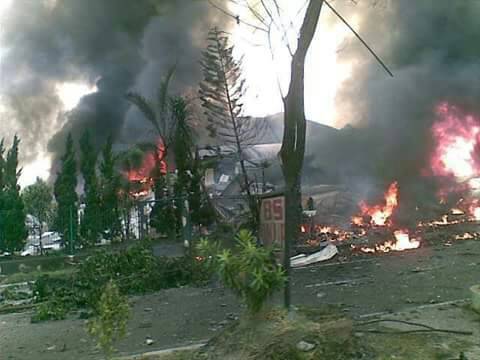
More than 100 people on board an Indonesian military aircraft that careered into the side of a building and burst into flames just minutes after take off are feared dead.
Twelve crew members and 101 passengers, including military officers and their family members, were on board the C-130 Hercules plane when it crashed shortly after leaving an air force base in Medan on Indonesia’s Sumatra island.
Air force chief Agus Supriatna told local Metro TV news he was doubtful there would be any survivors.
“No, no. No survivors,” he said when asked about the possibility, “I just returned from the site.”
The Hercules plane crashed into a residential area in the densely populated city of Medan two minutes after take off from the Soewondo air force base en route to drop off supplies to the Natuna Islands in the South China Sea.
Police and rescue teams have pulled 49 bodies from the crash site and transported them to Adam Malik general hospital in Medan to be identified.
Dramatic pictures of the scene uploaded to social media showed the wreckage of the aircraft in flames and a crowd of onlookers amid the plumes of thick smoke.
“I saw the plane from the direction of the airport and it was tilting already, then I saw smoke billowing,” local resident Januar, 26, told AFP.
Other shots showed the side of one building gutted by the impact of the crash and damage to nearby buildings and cars.
According to Supriyatna, the Hercules aircraft was conducting a routine logistics operation. Produced in 1964, the marshal said the aircraft was well maintained and regularly used to transport personnel.
But in the wake of the crash, angry lawmakers from the Indonesian parliamentary commission on defence have called on the government to replace its aging military aircraft.
“We in the commission ask the government to buy new planes for the air force. The current fleet is mostly made up of old, poor-quality aircraft. It’s shameful that our soldiers still have to use them,” Pramono Aung told the Jakarta Post.
Indonesian military commander General Moeldoko has called for an investigation into the incident.
In the late 1990s and mid 2000s, a string of fatal plane crashes inIndonesia was blamed on the US military embargo put in place because of human rights abuses perpetrated in East Timor.
The embargo forced the Indonesian military to seek spare parts for its hardware elsewhere and fly planes that were in less than ideal conditions.
It was lifted a decade ago and Indonesian aviation analyst Gerry Soejatman said the air force had toughened standards since 2005: We don’t have an arms embargo so why is there a crash?” he said.
“The hangars are full with those [aircraft] that are not airworthy... The ones that are flying have to be kept airworthy. The air force is pretty strict about it now, as compared to 10 years ago.”
No details have been released regarding whether mechanical or human error led to the crash, but a witness said the plane was emitting smoke from at least one of its engines.
In 2009, an Indonesian air force Hercules hit four houses before skidding into a rice field killing 95 people on board and two on the ground. Last December, an Airbus A320 run by AirAsia crashed on a flight from Indonesia to Singapore, killing all 162 people on board.
BUJUMBURA, Burundi — The body of Leonidas Musago, 29, lay still in the middle of an unpaved backstreet of Nyakabiga, a district of Burundi’s capital of Bujumbura on the morning of May 7. From a distance, his body looked like one of the protestors’ many roadblocks made from blackened logs that for weeks had prevented vehicles from entering or exiting much of the city. Musago had been stoned to death by an angry mob, his body then burned. Blood trickled from a head wound, and his corpse — only partially burned after the mob quickly extinguished the fire — lay charred in the dirt.
Tribal gunmen and militia groups have been involved in fierce clashes with Shia Houthi rebels
30 June 2015
About 1,200 prisoners, including al-Qaeda suspects, have escaped from a prison in central Yemen, officials say.
There were clashes at the prison in the central town of Taiz ahead of the break-out.
Yemen is in the grip of its most severe crisis in years, as competing forces fight for control.
The country was thrown into turmoil after Houthi rebels forced President Abdrabbuh Mansour Hadi to flee to Aden and then to Saudi Arabia.
It is not clear how the prisoners escaped.
State news agency Saba quoted a security official as saying that the prison had come under attack from al-Qaeda supporters.
However, another official told the Reuters news agency that the inmates had fled amid heavy clashes between warring militias.
The Associated Press said the prison guards had deserted their posts following clashes between Houthi rebels and their opponents, citing a security source.
It is the third major jailbreak in Yemen since a Saudi-led air campaign against the rebels began on 26 March.
The U.N. human rights office has called on Thailand to release 14 student activists arrested for holding a peaceful rally and charged with sedition.
The 14 arrested on Friday were also charged with violating the junta’s ban on political gatherings for taking part in an anti-coup rally in Bangkok.The military that staged a coup last May has banned political rallies of five people or more.
The students, who will be tried in military courts, could face up to 7 years in prison. They are among a small group of activists who publicly oppose the junta, which came to power in a bloodless military coup in May 2014.
The U.N. Human Rights Office for South East Asia on Tuesday also asked the government to review its use of laws that limit freedom of expression and assembly.
“The United Nations Human Rights Office for South East Asia (OHCHR) urges the Government to promptly drop criminal charges against students who have been arrested in Bangkok for peacefully demonstrating in public and release them from custody,” said Tuesday’s statement.
It added: “Now more than one year on [from the coup], despite pledges by the Government to promptly restore the rule of law, restrictions on fundamental freedoms remain in place.”
Meanwhile, the European Union described the arrest and prosecution of the students as a “disturbing development”.
“The arrests of 14 students on the basis of charges brought against them for peacefully demonstrating… is a disturbing development,” it said in a statement released on Tuesday.
It added: “Respect for human rights and fundamental freedoms must be upheld, and military courts should not be used to try civilians.”
Deputy government spokesman Sansern Kaewkamnerd said the government does not have a problem with the students but they must obey the law.
PETA’s latest investigation shows shocking conditions for animals in Texas and Africa who are forced to suffer and die for “luxury” bags, belts, and watchbands.
ETA’s investigator documented that workers crudely hacked into the necks of some alligators and tried to scramble their brains with metal rods—all in the name of “luxury.”
Some animals were still conscious, kicking and flailing, even minutes after workers tried to kill them.
Alligators Suffer Gruesome Deaths in Texas
In Winnie, Texas, there’s an alligator factory that sends skins to an Hermès-owned tannery, and there, PETA’s investigator found alligators kept in extremely smelly and dark sheds without sunshine, fresh air, clean water, or even basic medical care. At just 1 year old, alligators are shot with a captive-bolt gun or crudely cut into while they’re still conscious and able to feel pain. Our investigator documented the following actions by workers there:
repeatedly shooting alligators in the head with a captive-bolt gun
cutting into more than 500 conscious alligators, some of whom struggled to escape
stabbing conscious alligators to try to dislocate their vertebrae—even though a manager had admitted that “reptiles will continue to live” after that
The investigator saw alligators continuing to move their legs and tails in the rack where they were put to bleed out and in bloody ice bins several minutes after workers had attempted to slaughter them. These living, feeling animals are referred to as “watchbands” by the manager as if they were inanimate objects.
Zimbabwe's Concrete Crocodile Prisons
At the facility of one of the world’s largest exporters of Nile crocodile skins in Zimbabwe, Africa, tens of thousands of crocodiles are confined to concrete pits from birth to slaughter. They are deprived of the opportunity to engage in their natural behavior, including digging tunnels, protecting their young, and searching for food as they would do in nature.
In the wild, Nile crocodiles can live to be up to 80 years old, but at this facility they are slaughtered at the age of around 3.
her spine.
You Can Help Stop This!
After the alligators’ and crocodiles’ miserable lives and sometimes slow, gruesome deaths, their skins are sent to Hermès-owned tanneries and made into “luxury” items like $2,000 watchbands and $40,000 handbags. Tell Hermès to stop selling products made out of crocodile and alligator skins now!
And remember: NEVER buy any product made out of animal skin.
To earn points and badges for taking action, log in or join the Street Team now by clicking here.
MONDAY29 JUNE 2015
The Crown Prosecution Service today reversed a decision not to prosecute the Labour peer over child sex abuse allegations. What is the background to this latest move? And what happens next?
Residents embrace traditional remedies amid doubts over the state health system’s ability to cope with a potential outbreak of virus. Daily NK reports
Workers disinfect a subway train carriage in Seoul. Amid fears of a spread across the border, DPRK citizens are turning to their own cures and remedies. Photograph: Yonhap/AFP/Getty Images
Choi Song Min for Daily NK, part of the North Korea network-Tuesday 30 June 2015
While the North Korean authorities step up efforts to ward off the Mers outbreak, residents distrustful of the state’s ability to contain the disease are turning to traditional remedies.
“These days, citizens are applying various preventative measures in order to deal with Mers, [the infection] rampant in South Korea,” a source from South Hamgyong Province said.
Though there have been no reported cases north of the border yet, the DPRK has taken rigorous steps to block the virus, including bulk-testing citizens and quarantining of all foreign goods.
“There has been a lot of active awareness campaigning along with prevention measures all across the country,” a source in South Pyongan Province reported.
“It’s not only provincial, city, and county hospitals, but small local clinics that are carrying out daily tests on residents.”
The virus has claimed 32 lives in South Korea during the recent outbreak.
Recently, North Korean chemists claimed to have found a cure for the respiratory disease, based on ginseng and rare earth metals. But residents have been turning to another “cure”, which they say has been tried and tested during previous epidemics in the country.
“Squid was effective in treating paratyphoid [enteric fever], which wreaked havoc on North Korea a decade ago, and there are many who are seeking it out again,” the source from South Hamkyung explained.
“The citizens think that squid will be just as effective to treat Mers because the state cited fever as one of the affliction’s main symptoms – just like paratyphoid.”
Paratyphoid is an acute infectious disease caused by bacteria known as Salmonella enterica. When it swept through the DPRK in 2006, eating boiled squid from the East Sea became known as a miracle cure, and was thought to put patients on the fast track to recovery and help regain appetite.
Given that many residents have lost faith in the state’s crumbing medical system, many are prepared to devise their own methods to cope with medical threats.
“Citizens cannot get medicine, even when various infectious diseases spread. So they actively use these folk remedies rather than listening to the authorities,” she explained, adding that the East Sea is replete with squid, bringing relief to many who feel the stuff will help them combat a potential infiltration of Mers.
She conceded that there is absolutely no “scientific evidence pointing to how a salty, boiled soup of squid is effective in curing infectious diseases that entail high fever, vomiting, and diarrhoea”.
Universal healthcare was one of the North Korean state’s founding commitments to its people, but hospitals in the country are said to have have deteriorated badly, with some believing that sanctions are contributing to the problem.
It’s now thought that the DPRK routinely struggles to combat diseases such as tuberculosis, and respiratory infections are among its most common causes of death,according to the World Health Organisation.
There’s no right or wrong way to check your breasts. Try to get used to looking at and feeling your breasts regularly. Remember to check all parts of your breast, your armpits and up to your collarbone.
What changes should I look and feel for?
Nobody knows your body like you do,so you’re the best person to notice any unusual changes.
Changes in size or shape.
Changes in skin texture such as puckering or dimpling.
In this photograph taken on June 9, 2015, Sri Lankan war widow Evin Selvy, 45, listens to a question from an AFP journalist during an interview in Jaffna, some 400 kilometres (250 miles) north of the capital Colombo. (Agence France-Presse)
June 28, 2015
JAFFNA, SRI LANKA: Shunned, destitute and pushed into prostitution in some cases, Sri Lanka's Tamil widows have returned to northern Jaffna since the end of the separatist war only to discover they are not welcome even in their homeland.
Now, six years after the war ended, the women who fled the fighting on the peninsula in their thousands are pinning their hopes on the nation's new president for a better future for their families.
"Widows are despised in our society," said Baskaran Jegathiswari, 50, fighting back tears at her home in Achchuveli village in Jaffna, heartland of Sri Lanka's ethnic Tamil minority.
"People look down on us. They think we bring bad luck," said Jegathiswari, who lost her husband to military shellfire just months before the war ended in 2009.
The women, whose husbands were killed or are officially still listed as missing, are closely watching President Maithripala Sirisena who took office in January pledging reconciliation to "heal broken hearts and minds".
Official figures show 27,000 widows head households in Jaffna, where the conflict was centred, while local politicians put the figure much higher.
"I can't think of rebuilding my life now," said widow Evin Selvy who struggles to feed her family, earning 500 rupees ($3.80) a day as a farm labourer.
"But I hope the new government will make it better for my three daughters."
Having taken refuge elsewhere in the north, Selvy returned to Jaffna in 2009 to find her home and the rest of her village destroyed in the fighting.
After grabbing just a handful of possessions, the 45-year-old had fled in 1990 with her husband, who was killed by military shelling in the war's final months.
She and her daughters now live in a hut thrown up alongside their house, which has been partly rebuilt with funding from an Indian government project for war victims. But they cannot afford the remaining 200,000 rupees needed to finish it.
Demand Sexual Favours
At least 100,000 people were killed in the war between 1972 and 2009 when the military finally crushed Tamil rebels fighting for a separate homeland for the ethnic minority.
Thousands are still unaccounted for, including suspected rebels rounded up by security forces or who surrendered in the conflict's final phase and then disappeared.
Widows left behind say they feel vulnerable, with reports of physical abuse by members of their community. Others are ostracised, considered bad luck by the conservative Hindu society.
"A war with weapons ended in 2009 but a new social conflict has begun. Young war widows are most vulnerable," said a social worker helping widows in Jaffna, referring to domestic and other violence.
She refused to give her name.
Many struggle to find jobs and cannot make ends meet, with some forced into prostitution, according to another social worker, Dharshini Chandiran.
"Widows don't have a good place in our society," said Christine Manoharan, who heads a support group for 1,700 widows.
"Men demand sexual favours from us. We don't have any security," said Manoharan, 34, herself a widow.
Several widows told AFP that even family friends were trying to take advantage of their plight, seeking sex in return for financial or other assistance. Some told of being regularly propositioned when travelling alone on public transport in a country with relatively low crime rates.
Some are being coaxed by well-meaning members of the Tamil community to remarry to give them some security, said women's activist Mariarosa Sivarasa.
But some are also being targeted by criminals to leave their villages and work as prostitutes in larger towns, said Ananthi Sasitharan, 43, a member of the local Northern Provincial Council.
Despite all the problems Sasitharan said she was optimistic Sirisena would eventually take up their plight, with signs his government was moving towards reconciliation.
"He appears a simple person... I feel we can even call him directly to discuss any problem," Sasitharan told AFP.
Inquiry Into Atrocities
Sirisena on Friday ordered the dismissal of parliament, clearing the way for a general election expected to be held in August, in a bid to strengthen his party's numbers and bolster his mandate for reform.
The government has started returning some land throughout the north to families whose property was seized by the military during the war.
Sirisena has also pledged a domestic inquiry into allegations by a UN panel of atrocities committed in the fighting, including the killing of thousands of civilians and sexual violence by soldiers.
Previous president Mahinda Rajapakse, an autocrat in power for a decade, rejected Western pressure for an investigation, saying no civilians were killed. He was accused of failing to unify Tamils with the majority Buddhist Sinhalese after the war.
Under Sirisena, restrictions have been relaxed on Jaffna's population, including easier travel to and from the peninsula which underwent immense reconstruction under Rajapakse.
Intelligence officers have halted their regular grilling and harassment of widows whom they suspected were still linked to remnants of the rebels.
But widows and the wider Tamil community argue there is still a long way to go, including meeting a key demand to remove large concentrations of troops still stationed in the north.
"We think the new president wants to change things," activist Sivarasa said. But after decades of suffering, a quick fix seems unlikely.


 Tuesday, 30 June 2015


 Tuesday, 30 June 2015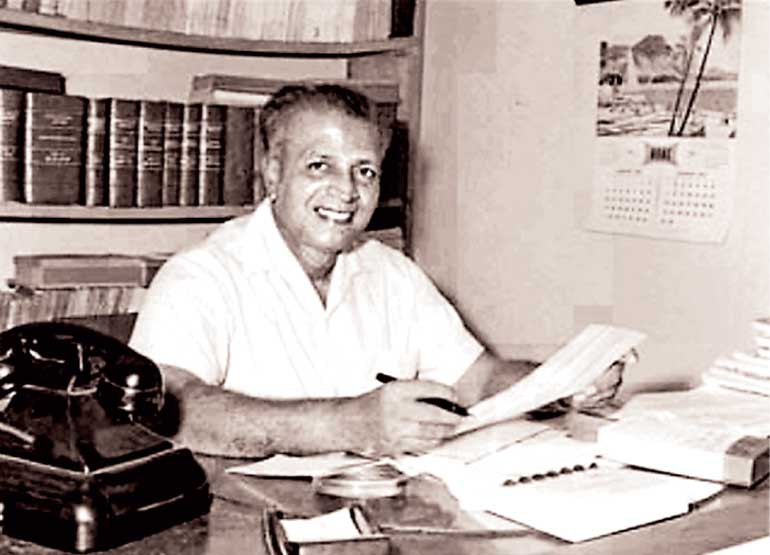








--(None)_LRG.jpg&container=blogger&gadget=a&rewriteMime=image%2F*)


