Peace for the World

Peace for the World
First democratic leader of Justice the Godfather of the Sri Lankan Tamil Struggle: Honourable Samuel James Veluppillai Chelvanayakam

Monday, July 1, 2019

The battle for Alabama’s soul

Alabama’s flag is a giant crimson X — the St. Andrew’s cross, that’s almost a pentimento of the Confederate flag. (Rob Dobi/For The Washington Post)


Demasking The Torture Of Julian Assange

Yes, living in an Embassy with a cat and a skateboard may seem like a sweet deal when you believe the rest of the lies. 

Assange
by Nils Melzer-2019-07-01
UN Special Rapporteur on Torture
I know, you may think I am deluded. How could life in an Embassy with a cat and a skateboard ever amount to torture? That’s exactly what I thought, too, when Assange first appealed to my office for protection. Like most of the public, I had been subconsciously poisoned by the relentless smear campaign, which had been disseminated over the years. So it took a second knock on my door to get my reluctant attention. But once I looked into the facts of this case, what I found filled me with repulsion and disbelief.
Surely, I thought, Assange must be a rapist! But what I found is that he has never been charged with a sexual offence. True, soon after the US had encouraged allies to find reasons to prosecute Assange, two women made the headlines in Sweden. One of them claimed he had ripped a condom, and the other that he had failed to wear one, in both cases during consensual intercourse — not exactly scenarios that have the ring of ‘rape’ in any language other than Swedish. Mind you, each woman even submitted a condom as evidence. The first one, supposedly worn and torn by Assange, revealed no DNA whatsoever — neither his, nor hers, nor anybody else’s. Go figure. The second one, used but intact, supposedly proved ‘unprotected’ intercourse. Go figure, again. The women even texted that they never intended to report a crime but were ‘railroaded’ into doing so by zealous Swedish police. Go figure, once more. Ever since, both Sweden and Britain have done everything to prevent Assange from confronting these allegations without simultaneously having to expose himself to US extradition and, thus, to a show-trial followed by life in jail. His last refuge had been the Ecuadorian Embassy.
Alright, I thought, but surely Assange must be a hacker! But what I found is that all his disclosures had been freely leaked to him, and that no one accuses him of having hacked a single computer. In fact, the only arguable hacking-charge against him relates to his alleged unsuccessful attempt to help breaking a password which, had it been successful, might have helped his source to cover her tracks. In short: a rather isolated, speculative, and inconsequential chain of events; a bit like trying to prosecute a driver who unsuccessfully attempted to exceed the speed-limit, but failed because their car was too weak.
Well then, I thought, at least we know for sure that Assange is a Russian spy, has interfered with US elections, and negligently caused people’s deaths! But all I found is that he consistently published true information of inherent public interest without any breach of trust, duty or allegiance. Yes, he exposed war crimes, corruption and abuse, but let’s not confuse national security with governmental impunity. Yes, the facts he disclosed empowered US voters to take more informed decisions, but isn’t that simply democracy? Yes, there are ethical discussions to be had regarding the legitimacy of unredacted disclosures. But if actual harm had really been caused, how come neither Assange nor Wikileaks ever faced related criminal charges or civil lawsuits for just compensation?
But surely, I found myself pleading, Assange must be a selfish narcissist, skateboarding through the Ecuadorian Embassy and smearing feces on the walls? Well, all I heard from Embassy staff is that the inevitable inconveniences of his accommodation at their offices were handled with mutual respect and consideration. This changed only after the election of President Moreno, when they were suddenly instructed to find smears against Assange and, when they didn’t, they were soon replaced. The President even took it upon himself to bless the world with his gossip, and to personally strip Assange of his asylum and citizenship without any due process of law.
In the end it finally dawned on me that I had been blinded by propaganda, and that Assange had been systematically slandered to divert attention from the crimes he exposed. Once he had been dehumanized through isolation, ridicule and shame, just like the witches we used to burn at the stake, it was easy to deprive him of his most fundamental rights without provoking public outrage worldwide. And thus, a legal precedent is being set, through the backdoor of our own complacency, which in the future can and will be applied just as well to disclosures by The Guardian, the New York Times and ABC News.
Very well, you may say, but what does slander have to do with torture? Well, this is a slippery slope. What may look like mere «mudslinging» in public debate, quickly becomes “mobbing” when used against the defenseless, and even “persecution” once the State is involved. Now just add purposefulness and severe suffering, and what you get is full-fledged psychological torture.
Yes, living in an Embassy with a cat and a skateboard may seem like a sweet deal when you believe the rest of the lies. But when no one remembers the reason for the hate you endure, when no one even wants to hear the truth, when neither the courts nor the media hold the powerful to account, then your refuge really is but a rubber boat in a shark-pool, and neither your cat nor your skateboard will save your life.
Even so, you may say, why spend so much breath on Assange, when countless others are tortured worldwide? Because this is not only about protecting Assange, but about preventing a precedent likely to seal the fate of Western democracy. For once telling the truth has become a crime, while the powerful enjoy impunity, it will be too late to correct the course. We will have surrendered our voice to censorship and our fate to unrestrained tyranny.

Recap of Paris Airshow 2019


logo Monday, 1 July 2019

The 54th edition of the Paris Airshow concluded last week at Le Bourget Airfield. Billed as the world’s oldest Airshow, it has been held biennially since 1919, with interruptions only for the two world wars.
Airbus wins big

Airbus, celebrating its 50th anniversary, was the big winner, with the lion’s share of the 866 orders announced at the show. The latest iteration of the pioneering A320 family, the Extra Long Range version (dubbed the A321XLR) was the darling of Paris 2019, with 230 orders.

Indigo Partners, a US investment group that controls several airlines (including Europe’s Wizz Air, the US’s Frontier Airlines and Chile’s JetSmart) ordered 50 A321XLRs. They were joined by some of the world’s airline heavyweights including the International Airline Group (IAG), American Airlines, Qantas, Saudia, giant lessor Air Lease Corporation (ALC) and many others.

The existing versions A320 and 321NEO (New Engine Option) also gained over 350 orders, but the bulk of these were from AirAsia converting 253 existing A320 orders to the larger A321s.Obviously Asia’s largest Low Cost Carrier (LCC) group sees a strong market and wants to add seats.

Airbus’s widebody stable was a poor performer, with only two customers for the A330NEO placing a total of 24 orders and six options. Interestingly there were no orders for the ‘flagship’ A350 line. The giant A380, as we know, has not sold a single unit in years and production will cease in a few years.

Airbus also saw healthy orders for the smaller A220 (previously the Bombardier C-series) with almost a hundred commitments, including a landmark order of 50 units from lessor ALC.

Boeing fights back

Still struggling with the fallout from the 737MAX debacle (discussed previously in these pages) Boeing fought back at Paris with some landmark orders.

The 787, by far the dominant ‘new’ widebody in the market, saw 25 orders. There was only one order for a passenger 777 (by Turkmenistan Airlines)  but the freighter version saw 11 orders (China Airlines for six and Qatar Airways for five units) showing confidence in a healthy cargo market. There were no orders for the upgraded 777X, which is yet to fly – delayed again by engine manufacturing related issues.

The breakthrough though, was a Letter of Intent (LOI) for 200 737MAXs by the International Airline Group (IAG)– the first show of confidence since the two tragic crashes that the aircraft is safe, despite the hysteria shown in some sections of the media.

IAG CEO Willie Walsh, himself a pilot who has flown the 737, expressed total confidence in the aircraft. Walsh, who has a reputation as one of the toughest negotiators in the business, must have gotten an amazing price for the aircraft as well.

Trends

Several interesting trends became evident in Paris. One is the domination of large leasing companies (292 orders) and LCC airline groups (450+ orders).

Accipiter Holdings (a smaller Irish leasing company) and giant ALC made significant orders. Nordic Aviation Capital and Elix Aviation Capital, both specialists in regional turbo-prop aircraft, now dominate the order book for manufacturer ATR’s future production of the popular regional aircraft. AirAsia, IAG and Indigo Partners also made large orders. Interestingly, the other two large lessors Avolon and Aercap (both based in Dublin, Ireland) did not place any orders this year in Paris.

The narrowbody models (also known as single-aisle) are now easily the preferred choice of most airlines and lessors. A total of 558 narrowbody orders plus 246 regional jets and turbo-props were ordered in Paris, as opposed to just 62 widebody units. That is in stark contrast to just a few years previously.

The popularity of the Airbus A320 family, particularly the XLR, show that airline managers are focusing on cost efficiency. The dominance of the LCCs further reinforces this observation. Interestingly, the XLR will start cannibalising the market of not only Boeing’s aging 757 & 767 fleets, but also Airbus’s own larger A330s.

Capable of flying non-stop on ‘long and thin’ routes such as Colombo to Perth (Australia), Colombo-Beirut (Lebanon) or Colombo-Seoul (South Korea) the A321XLR makes it possible for airlines to open new routes which were previously not within the range of narrowbody aircraft and too small for deployment widebody aircraft, with unrivalled operating costs.

The dearth of orders for the larger widebody types must worry the manufacturers. The 787 remains the dominant type certainly, but Boeing’s cash-cow 777 (having over 2000 orders, of which 1,600 have been already delivered) is obviously at the end of its useful life and there is a worrying lack of enthusiasm for the new generation 777X.

Airbus’s A350 series is also seeing stalled orders, in part due to current users of the popular A330-family preferring the upgraded A330-900NEO, which is believed to be significantly cheaper to acquire than its bigger brother.

This suggests that the current trend in the market is to move towards ‘right-sized’ flying with smaller and more cost efficient aircraft flying longer distances, instead of moving to larger, prestige driven, and widebody aircraft. Such a switch, undoubtedly, will also see a shift of service standards – with most airlines likely to lower some frills in order cut costs and the routes more viable.  Whether the orders switch to smaller gauge aircraft is a long-term or not, one thing is for certain – the airline industry shows no signs of a slowdown.

'Precipitous' fall in Antarctic sea ice since 2014 revealed

Plunge is far faster than in Arctic and may lead to more global heating, say scientists
Antarctic sea ice plunges from record high to record lows – video

Environment editor @dpcarrington-

The vast expanse of sea ice around Antarctica has suffered a “precipitous” fall since 2014, satellite data shows, and fell at a faster rate than seen in the Arctic.

The plunge in the average annual extent means Antarctica lost as much sea ice in four years as the Arctic lost in 34 years. The cause of the sharp Antarctic losses is as yet unknown and only time will tell whether the ice recovers or continues to decline.

But researchers said it showed ice could disappear much more rapidly than previously thought. Unlike the melting of ice sheets on land, sea ice melting does not raise sea level. But losing bright white sea ice means the sun’s heat is instead absorbed by dark ocean waters, leading to a vicious circle of heating.

Sea ice spreads over enormous areas and has major impacts on the global climate system, with losses in the Arctic strongly linked to extreme weather at lower latitudes, such as heatwaves in Europe.

The loss of sea ice in the Arctic clearly tracks the rise in global air temperatures resulting from human-caused global heating, but the two poles are very different. The Arctic is an ocean surrounded by continents and is exposed to warming air, while Antarctica is a freezing continent surrounded by oceans and is protected from warming air by a circle of strong winds.

Antarctic sea ice had been slowly increasing during the 40 years of measurements and reached a record maximum in 2014. But since then sea ice extent has nosedived, reaching a record low in 2017.

“There has been a huge decrease,” said Claire Parkinson, at Nasa’s Goddard Space Flight Center in the US. In her study, published in the journal Proceedings of the National Academy of Sciences, she called the decline precipitous and a dramatic reversal.

“We don’t know if that decrease is going to continue,” she said. “But it raises the question of why [has it happened], and are we going to see some huge acceleration in the rate of decrease in the Arctic? Only the continued record will let us know.”

“The Arctic has become a poster child for global warming,” Parkinson said, but the recent sea ice falls in Antarctica have been far worse. She has tracked Antarctic sea ice for more than 40 years. “All of us scientists were thinking eventually global warming is going to catch up in the Antarctic,” she said.

Kaitlin Naughten, a sea ice expert at the British Antarctic Survey, said: “Westerly winds which surround the continent mean that Antarctic sea ice doesn’t respond directly to global warming averaged over the whole planet.”

“Climate change is affecting the winds, but so is the ozone hole and short-term cycles like El Niño. The sea ice is also affected by meltwater running off from the Antarctic ice sheet,” she said. “Until 2014, the total effect of all these factors was for Antarctic sea ice to expand. But in 2014, something flipped, and the sea ice has since declined dramatically. Now scientists are trying to figure out exactly why this happened.”

Prof Andrew Shepherd at Leeds University in the UK said: “The rapid decline has caught us by surprise and changes the picture completely. Now sea ice is retreating in both hemispheres and that presents a challenge because it could mean further warming.” He said it would also be important to find if the ice’s thickness has changed, as well as its extent.

The new research collated microwave satellite data from 1979 to 2018, providing excellent measurements of sea ice as the different signals from ice and ocean are very distinct and microwaves can be detected day or night and usually through clouds.

Sea ice expands in winter and retreats in summer every year, so Parkinson used annual averages to assess the long term trends. The biggest single year fall was in 2016, when an El Niño boosted human-caused warming to result in record global temperatures.

She said rates of decline after 2014 were three times faster than the most rapid melting ever recorded in the Arctic. Sea ice extent had a small uptick in 2018, but in 2019 so far there had been a further reduction, she said.

Parkinson said the dramatic plunge was a strong piece of evidence that scientists could use to narrow down the causes of the change. “As a Nasa scientist, my key responsibility is to get the satellite data out and I hope others will take this 40-year record and try to figure out how these dramatically rapid decreases since 2014 can be explained,” she said.

First battery-powered cruise ship sails for the Arctic

Hurtigruten's cruise ship MS Roald Amundsen is seen in the sea near Ulsteinvik, Norway July 1, 2019. Hurtigruten/Handout via Reuters

JULY 1, 2019

OSLO (Reuters) - The world’s first cruise ship propelled partially by battery power is set to head out from northern Norway on its maiden voyage, cruise operator Hurtigruten said on Monday.

The hybrid expedition cruise ship, the Roald Amundsen, can take 500 passengers and is designed to sail in harsh climate waters.

Named after the Norwegian explorer who navigated the Northwest Passage in 1903-1906 and was first to reach the South Pole in 1911, the ship heads for the Arctic from Tromsoe this week and will sail the Northwest Passage to Alaska before heading south, reaching Antarctica in October.

While the engines run mainly on marine gasoil, the ship’s battery pack enables it to run solely on batteries for around 45 to 60 minutes under ideal conditions, Hurtigruten Chief Executive Daniel Skjeldam told Reuters.

The company estimates that the battery pack will reduce fuel consumption and save about 20% in carbon dioxide emissions, compared to if the ship was operating on marine gasoil alone.

“It’s designed to take excessive energy from the engines and put into the battery when the ship doesn’t need it, and put it back into the engine when the ship needs it — it is a way of reducing emissions significantly without having charging stations available,” Skjeldam said.

The company, which operates scenic cruise lines along the country’s fjords and into the Arctic, was inspired by Norway’s fleet of hybrid ferries and also its growing fleet of electric cars, he said.
Battery technology for propelling ships is in its infancy, even on shorter routes, as few ports provide charging stations.

“We expect batteries to be an important part of shipping in the years to come, but of course we don’t expect our ships to be able to operate only on batteries, because the ship can sail up to 18-20 days in areas where there are no charging points,” Skjeldam said.

Hurtigruten expects infrastructure will improve on its traditional routes along the Norwegian coast, while currently charging services are only provided in Bergen, Norway’s second-largest city.
 
The future for batteries on larger ships also hinges on suppliers’ capacity to develop lighter, more powerful systems.

“We expect a revolution on battery technology for ships, we expect batteries to be lighter, more effective, and we’ve set aside extra room for more batteries to be installed when battery packs become more effective,” Skjeldam said.

He added that the second hybrid cruise ship the company has on order, to be delivered later this year, will have battery pack with twice the capacity of the Roald Amundsen.

‘I’m not me’: A bizarre disorder leaves people feeling distant from their bodies

Cover illustration, Health & Science, Depersonalization 0702. Credit: Marianna Gefen for The Washington Post (Marianna Gefen for The Washington Post/Marianna Gefen for The Washington Post)

I would stare at my hands and think, “I’m not me.” No matter where I was, in the middle of a busy street or at my dining table at home, the condition would be the same. It was like looking at my hands through a plate of glass. Although I could feel the skin on my palms, it did not feel like my own. Half of myself would move through the day while the other half watched. I was split in two.

Nothing I did would relieve the condition. I went to see an ophthalmologist, convinced I had cataracts. The verdict was near-perfect vision. I tried taking time off work, talking with family and writing notes about how my life had become a simulation. Each morning I would stare at the mirror in an attempt to recognize myself, but the distance between my body and this new, outer eye only grew larger.

I began to believe I was becoming psychotic and would soon be in a psychiatric ward. I was a 28-year-old, working as a copywriter while pursuing a PhD in art history, and I felt my life was nearing its end.

One evening in April 2008, as I contemplated another helpless night trapped beyond my body, full blown panic set in. I took up the phone, ready to dial for emergency, when suddenly music began to play from downstairs. It was a nauseating pop song that my neighbor played incessantly, but something about the melody gave me pause.

The next day I began a series of frustrating doctor’s visits. First with my physician, then a neurologist, gastroenterologist and chiropractor. I said that I had never taken drugs or drank alcohol excessively. While I was fatigued from my doctoral study, I didn’t think this qualified me for the split in the self that had occurred.

The diagnosis was anxiety-related depression. I was prescribed the antidepressant Duloxetine and told to use an online guide to CBT, or cognitive behavior therapy, which used cartoons to ask me basic questions about relationships, diet and sleep.

A misdiagnosis

Things got worse. I borrowed money to see a neuropsychiatrist and asked how I could possibly return to my body. He said that I had been misdiagnosed and that, in fact, I was suffering from depersonalization, a neglected and little-understood disorder first documented in the late 19th century by Swiss philosopher Henri Frédéric Amiel. “I find myself regarding existence as though from beyond the tomb,” he writes. “All is strange to me. I am, as it were, outside my own body and individuality; I am depersonalized.”

According to Elaine Hunter, a consultant clinical psychologist who has recently set up a specialist depersonalization clinic in London, it is like “a psychological fuse box being switched off involuntarily. The patient often complains of feeling emotionally, physically and cognitively numb.”

She tells me that while fleeting depersonalization is a common experience, especially given the overstimulation of our digital age, it is very different from developing a chronic disorder, which is what I had, where the change in the experience of the self is persistent and intractable.

The lack of global awareness when it comes to the disorder, particularly in regard to its scale, is a huge issue.

“Most doctors and psychiatrists are trained to believe that depersonalization disorder is extremely rare, and when present, is usually a secondary symptom of another condition such as anxiety or depression,” Hunter says. “This leads to frequent misdiagnosis, and then further suffering for the patient. It’s like trying to fix a knee problem by treating the chest.”

For many years, Daphne Simeon led a similar depersonalization clinic at New York’s Mount Sinai School of Medicine, specializing in a variety of psychotherapy and psychopharmacological treatments. In Simeon’s book on the disorder, “Feeling Unreal,” co-written with Jeffrey Abugel, she quotes from a patient named Joanne:

“I’d really rather have cancer than this. With a disease that people know, you can get some degree of empathy. But if you try and explain this, people either think you’re crazy or completely self-absorbed and neurotic. So you keep your mouth shut and suffer silently.”

'I have no identity of my own'

This was my experience. Trying to articulate the condition and have clinicians comprehend its gravity was the greatest obstacle. Following my initial onset, I searched for answers in Jean-Paul Sartre’s novel “Nausea” and came across this passage where the writer Antoine Roquentin muses on his lot:

“Existence is not something which lets itself be thought of from a distance; it must invade you suddenly, master you, weigh heavily on your heart like a great motionless beast — or else there is nothing at all.” This nothing — this void of self — is what I felt.

In R.D. Laing’s book “The Divided Self,” he quotes a 28-year-old patient named James who is suffering from the disorder: “The complaint he made all along was that he could not become a ‘person.’ He has ‘no self.’ ‘I am only a response to other people, I have no identity of my own.’ . . . He felt he was becoming more and more ‘a mythical person.’ He felt he had no weight, no substance of his own. ‘I am only a cork floating on the ocean.’ ”

When I speak with James Charney, a psychiatrist at the Yale School of Medicine, he says that people suffering from depersonalization are egodystonic, meaning their thoughts and behaviors are in conflict with the needs and goals of the ego. “The patient becomes alien to their ideal self-image, which is crippling and can destroy their life and those around them.”

According to studies in the United States and Britain, depersonalization affects 2 percent of the population — 6.4 million in the United States and 1.3 million people in Britain. This is about the same as schizophrenia and bipolar disorder, conditions that are much better understood. Although the disorder’s criteria has been expanded in the latest edition of the “Diagnostic and Statistical Manual of Mental Disorders” (DSM-5), it is still largely neglected by doctors as a condition in its own right.
So what causes it? Hunter tells me recent research has discerned three main categories: trauma, acute anxiety and drug use.

“If a person was neglected during childhood or was abused, this can be a trigger. Using cannabis, ketamine or a cocktail of drugs can also provoke an onset by triggering panic due to a ‘bad trip.’ In your case, Nathan, it sounds like it was brought on by extreme interpersonal and occupational stress. I know we don’t usually think of those things as resulting in a split of the self, but the fact is it happens all the time.”

Treatment mixed results

Cognitive behavior therapy is the most common form of treatment, despite mixed results. This involves emotion mapping and processing, along with charting the origin of the self in childhood with its associated image-memories. The idea is for the patient to build a bridge between “I” and “myself.” By reducing symptom monitoring and safety behaviors, over time the outer eye is able to reassimilate with the body. A more recent form of treatment is the introduction of mindfulness in a clinical setting. But this is somewhat controversial, as there have been studies to suggest mindfulness can actually increase symptoms of depersonalization.

Because the disorder is widely considered to be a psychological phenomenon, as opposed to the result of a chemical imbalance in the brain, drug treatments such as antidepressants are often ineffective. However, they may help reduce co-morbid symptoms of depression and anxiety. Since 1980, there have only been a handful of drug trials specifically related to depersonalization. Several show that combining Lamotrigine with an SSRI can be effective in patient recovery, while a pilot study from 2001 treated patients with Naloxone, a drug commonly used in opioid addiction treatment. Although this study was limited to 14 patients, in three patients the condition disappeared entirely, while seven patients showed a marked improvement.

Becoming a stranger to myself took me to the edge. In exile from my body, I was terrified of being trapped within the void of self and succumbing to the desire for suicide. Like many of those with depersonalization disorder, my recovery was gradual. It only began when I became aware of my true illness. With knowledge on my side, I was able to navigate the symptoms and accept that the sense of uninterrupted selfhood I had known was gone. I had to learn to live as an altered person — as an “other” — with my mind and body in a suboptimal state. Daily swimming and weekly visits to a psychologist helped this. Only in learning how to wake and sleep in the void, without fear of death, did my primitive, bedrock sense of self return.

Although I have relapsed several times in the decade since my diagnosis, with increased awareness and new forms of treatment, my hope is that those of us with the disorder can truly be free of its nightmare.
 

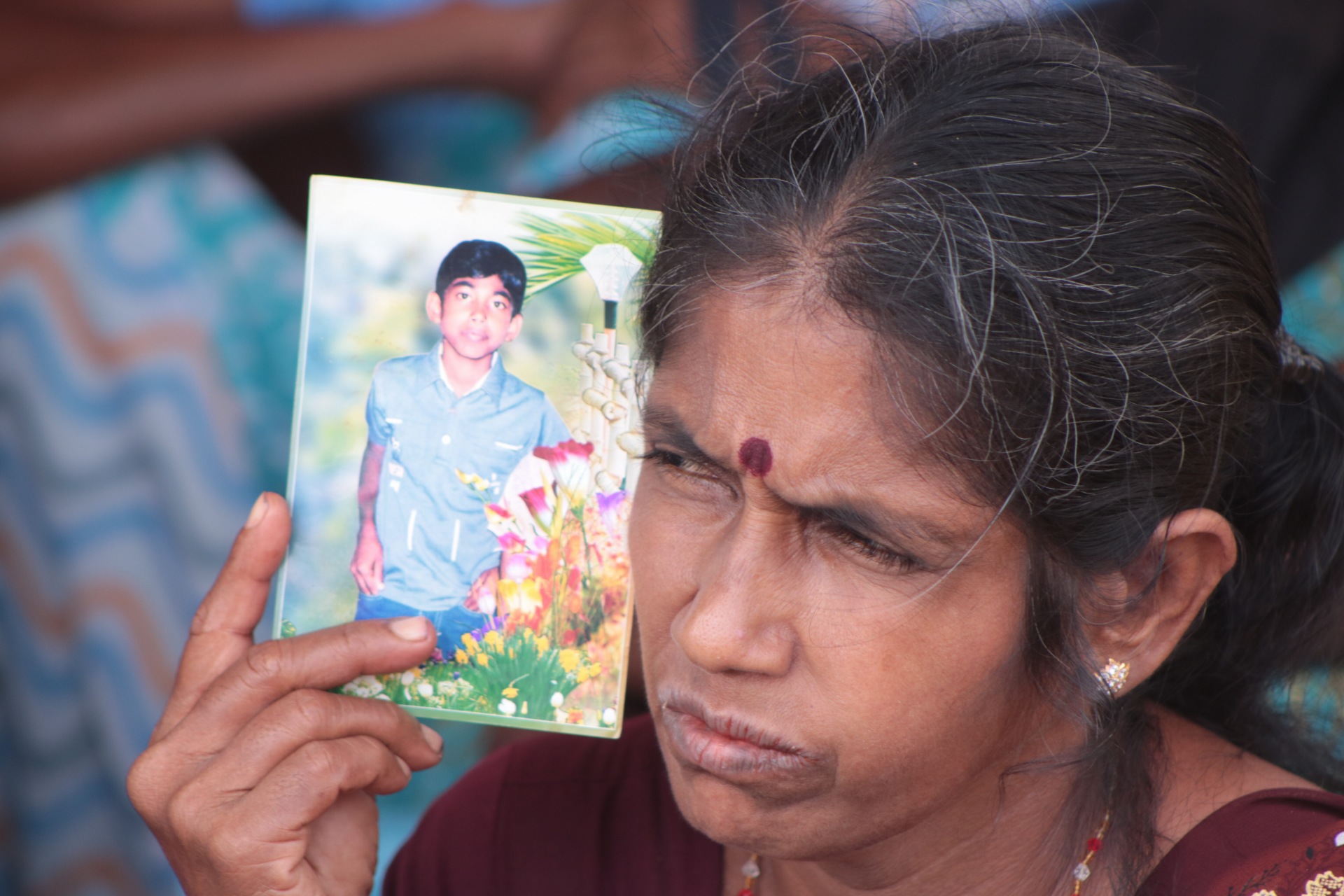
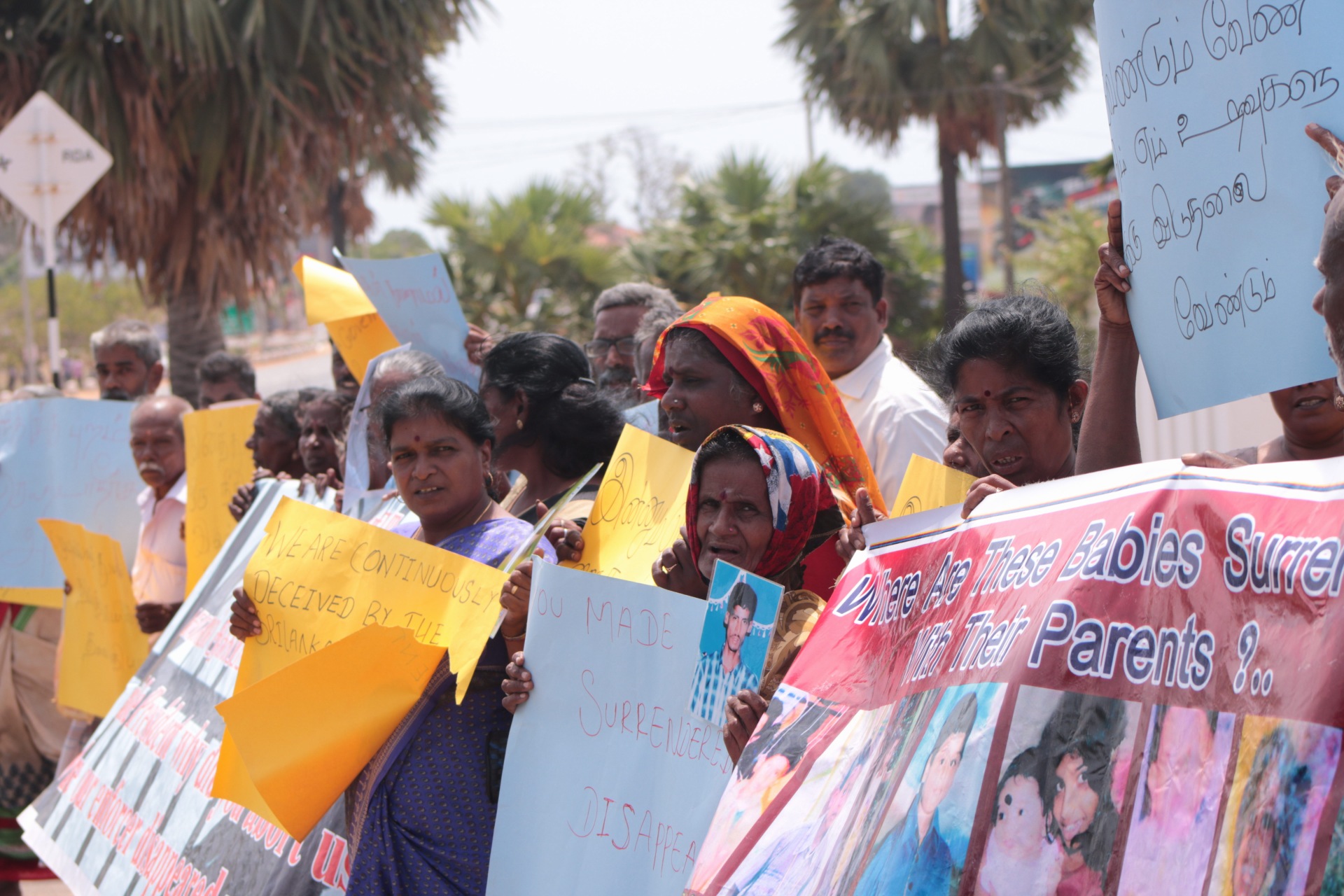
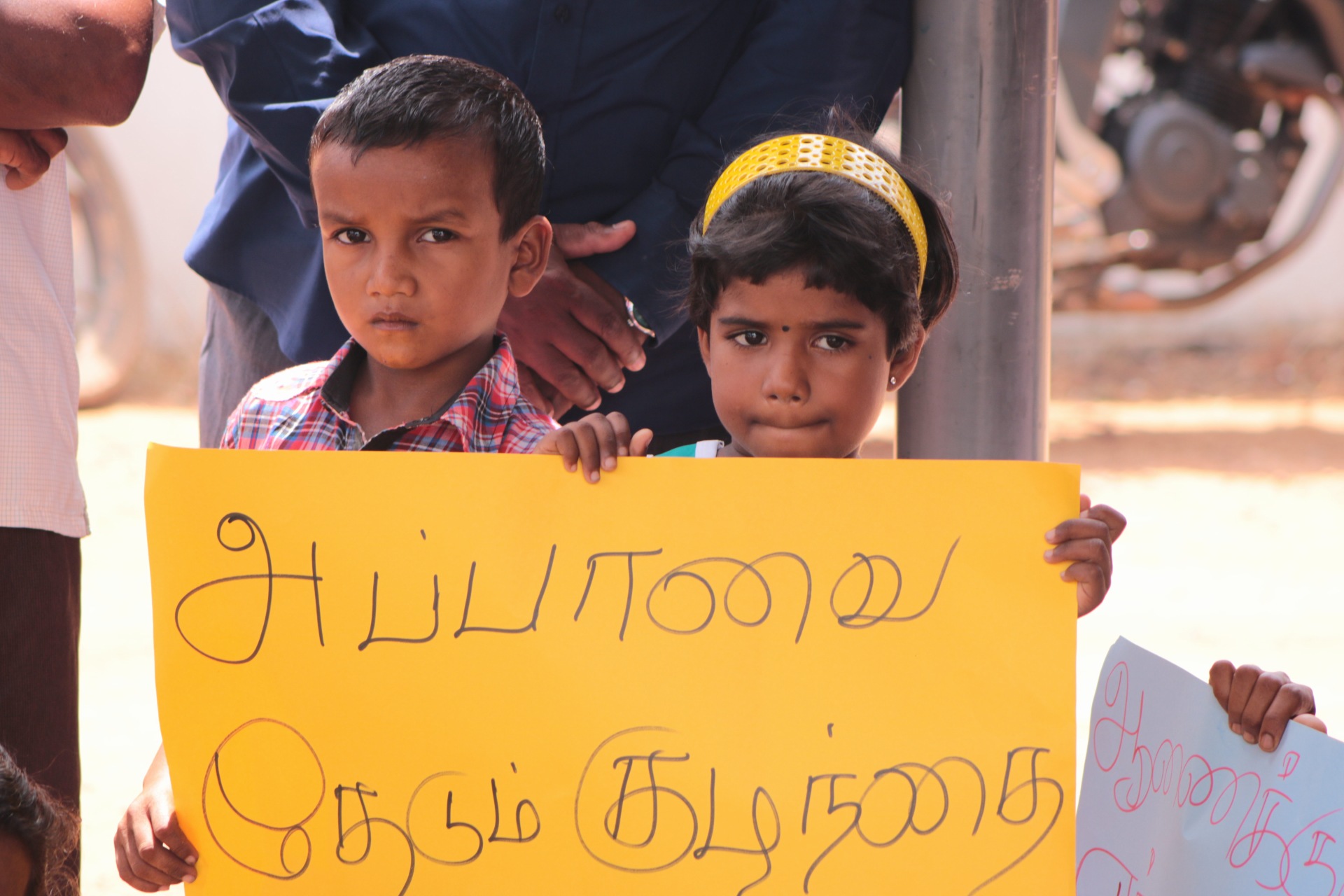
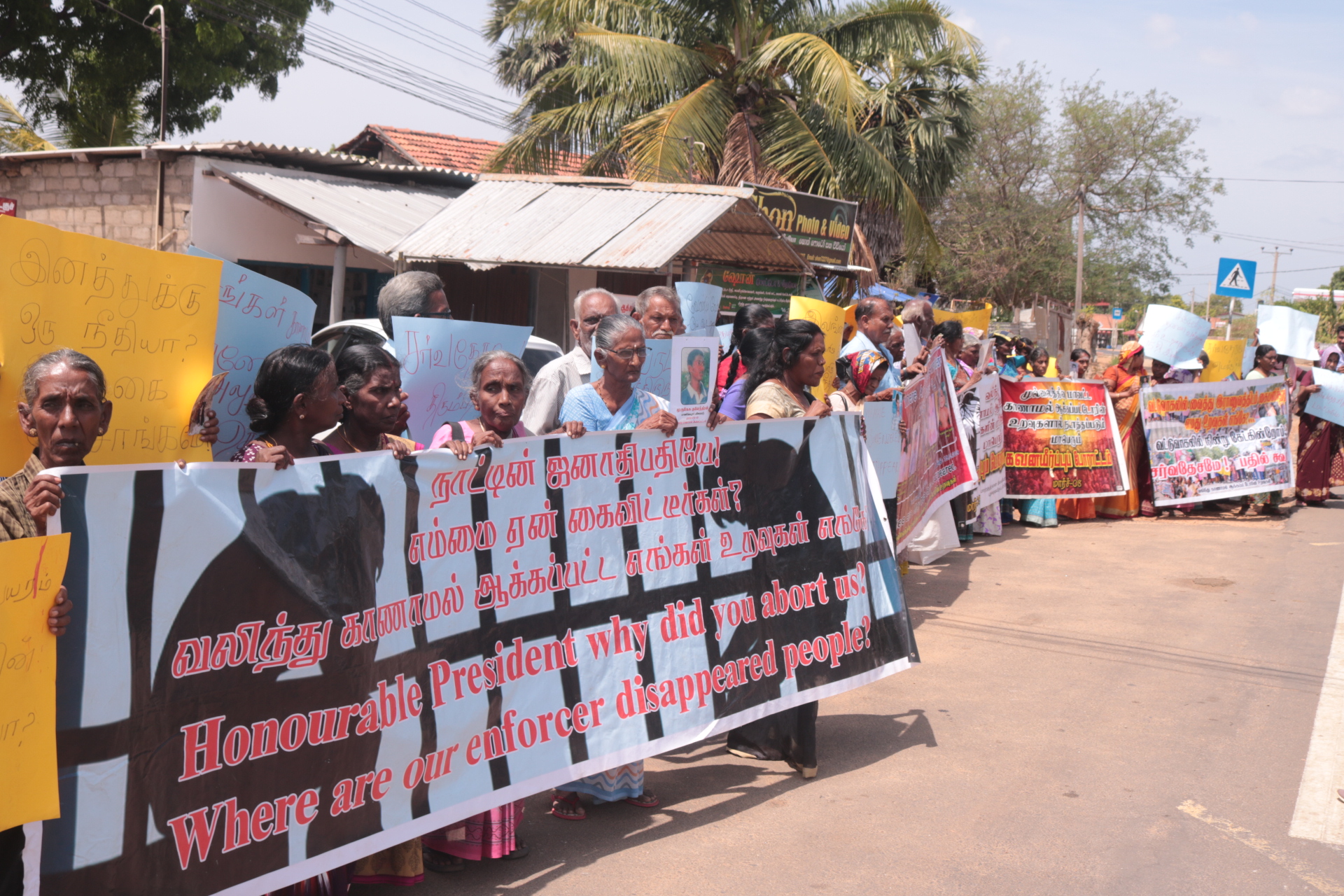
Families of disappeared continue protests across North-East

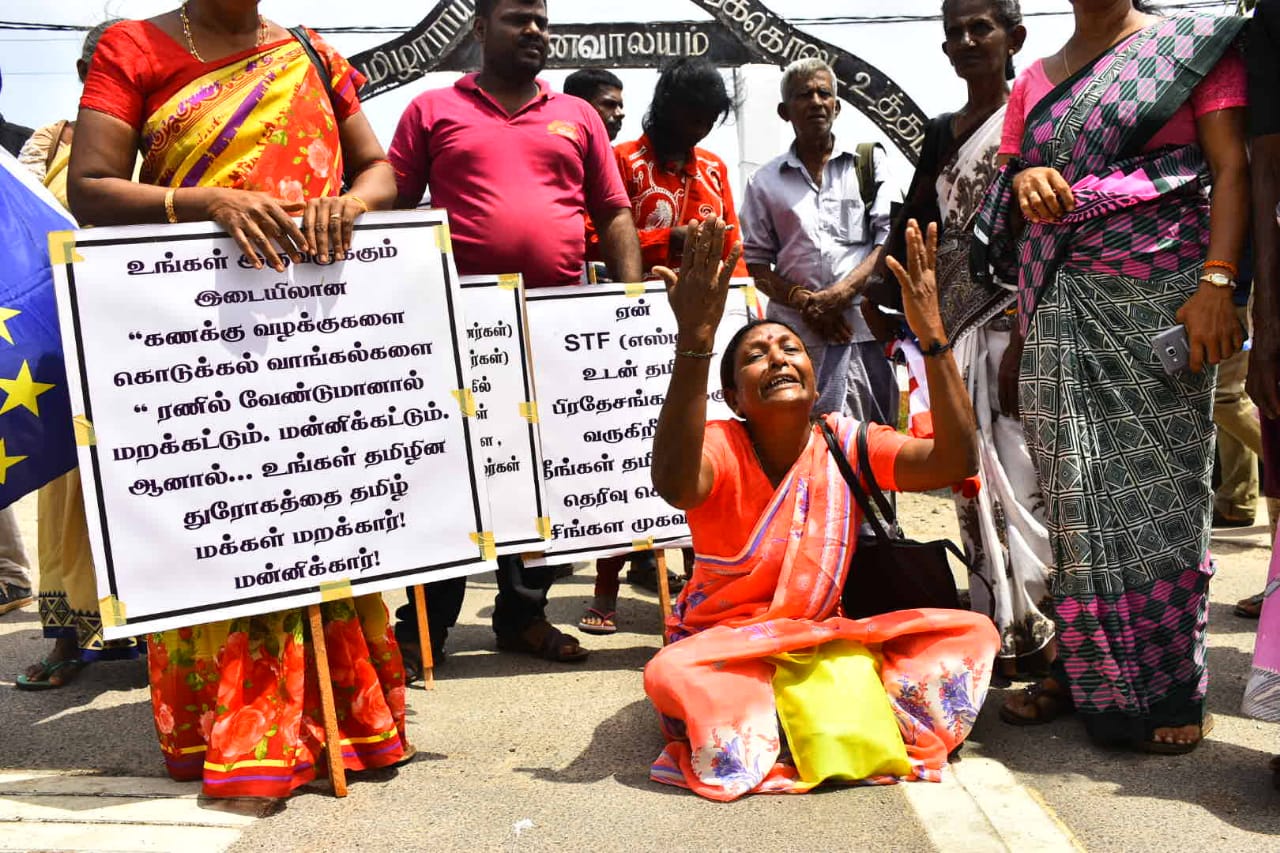
Families of the disappeared this week continued their protests across the North-East, demanding justice for their disappeared loved ones. 
30 June 2019
Mullaitivu 
In Mullaitivu, families marked their 846th day of continuous protest, demanding to know what happened to their disappeared loved ones. 


Vavuniya
Families of the disappeared from Vavuniya held a protest outside the the Ilankai Thamil Arasu Katchi national conference hall in Jaffna today, accusing Tamil politicians of failing to take sufficient action on the issue. 
Families said despite voting for the TNA in 2015, the party had failed to deliver, instead repeatedly pushing the families towards the Office on Missing Persons (OMP). 
Trincomalee
Families of the disappeared in Trincomalee held protest on Thursday, reiterating their demand for justice. 
Kilinochchi 
In Kilinochchi, families of the disappeared marked their 859th day of protest today. 
Families criticised local Tamil politicians for failing to provide them with justice for their disappeared loved ones. 

Mannar Magistrate orders forensic report on skeletal remains


article_image

By Dinasena Ratugamage- 

A fresh controversy has arisen over the Mannar mass grave site following a magisterial order that experts who carried out excavations provide a forensic report on the skeletons they had dug up before July 31.

Prof. Raj Somadeva of Kelaniya University confirmed that the court had issued the order, but there were issues with carbon dating reports issued by a Florida lab on the samples sent from the Mannar mass grave site.

Prof. Somadeva said that they had taken preliminary steps to prepare the forensic report. "We will also look at the non-skeletal items that were found at the site and to produce a report thereon as well. We can determine the age of these items, too."

Three hundred and thirty five skeletons have been identified and out of them 320 were removed from the site, including those of 29 children. The human skeletal remains were first found by some construction workers who were excavating the site behind the CWE Building in Mannar as part of a development project on May 25, 2018.

On the same day a complaint was lodged with the Mannar Police regarding the findings. Investigations began under the supervision of former Mannar Magistrate and District Judge Alex Raja.

Co-existence

  • "There have been widespread racist calls to boycott Muslim businesses"
  • "Chauvinistic forces unleashed physical violence against the Muslims"
1 July 2019
The call for co-existence is paradoxical. Is it a call for a return to a past where communities co-existed? Or is it a call for imagining new forms of existing together in the future? And can such co-existence be constructed, or does it evolve through social, economic and political relations over time?  
On the other hand, the attacks waged by chauvinist forces are increasingly polarising the country. These attacks targeting Muslims and spreading rumours about the Muslim community among the other ethnic communities have a clear agenda of isolating the Muslim community. In this context, there is the need for an ideological struggle against such forces of polarisation and confront them with discourses of pluralism and democracy. Such an ideological struggle for coexistence is the first and most important wall of defence against chauvinist attacks, as violence once unleashed begins a deteriorating spiral of devastation that we know from our tragic history.  

As the country is troubled by such inter-ethnic fissures the role of the state has historically been problematic. Indeed, there is considerable evidence of state complicity in many of the ethnic pogroms of the past. The modern state is defined as an institution that has a monopoly on the legitimate use of violence. Individuals or social institutions are legally forbidden to use violence on another individual or community. However, the police and the military that come under the state are legally sanctioned for purposes of law enforcement and national security to use force, as well as to detain individuals and restrict their freedoms.  

In this way, if modern states have monopolised powers of violent force, Sri Lanka is now facing a grave danger, as there are moves now to implement the death penalty after forty three years. The death penalty is an unacceptable escalation of the violent powers of the state, where the very existence of a person is at stake, and their lives are legally ended. Giving such powers of life and death, or existence itself to the state, is also among other things a grave attack on any conception of coexistence.   

The struggle for co-existence is about resistance to such attacks on collective and individual forms of existence as well as building solidarity. In this context, the Jaffna People’s Forumfor Coexistence organised a two day discussion in Jaffna over the weekend on June 29 and 30. The event with the participation of large numbers of women from many parts of the country including Puttalam, Batticaloa, Ratnapura, Peradeniya and Colombo, began with the screening of short films made by mainly young film makers from the East. Four short films titled ‘Abaya’, ‘Hartal’,‘Crossing the Muslim Street’ and ‘Fake ID is Watching You’ initiated lively discussions. As this column was written amidst ongoing discussions, I reproduce here the statement released by the Forum at the outset on June 29, 2019, which calls for similar dialogues on coexistence in other parts of the country.  

“The Easter attacks targeting Christian places of worship and hotels have created deep fissures in the country. Even as the bereaved families and friends continue to remember the loss of their loved ones and care for the injured, chauvinistic forces have unleashed physical violence and ideological campaigns against the Muslims. The targeted attacks on Muslim communities over the past decade have escalated in the months after the Easter attacks.  

While many of us are still trying to make sense of the tragic incidents of April 21, 2019, the events orchestrated by divisive forces are posing a threat to the socio-cultural, economic and political existence of the Muslims in Sri Lanka. Misogynistic forces within all communities have turned their repressive gaze on Muslim women’s mobility and attire. The state has issued regulatory instructions on women’s dress without having any serious consultations with women. There have been racist calls to boycott Muslim businesses. Muslim workers who rely on daily wages and small informal industries for their living have been subjected to physical and psychological abuse. These worrying developments are harmful to our society and the country’s economy.   

Recognising the importance of strengthening voices for unity among communities during the recent crisis, many individuals and groups came together to form the Jaffna People’s Forum for Co-existence. Respecting social diversity and celebrating the pluralist character of our polity are essential features of coexistence. As communities that share territories and resources, we depend upon one another for our security and collective well-being. The strength of our relationship with one another plays a decisive role in creating a violence-free society and ensuring our future existence. We have gathered here today in the hope that voices calling for coexistence will be heard aloud and similar discussions will take place in many parts of the country.   

All our communities have their own histories. However, we should remind ourselves that these histories continue to evolve and are in state of flux. Accepting diversity and change while strengthening the aspects that connect us is essential for coexistence. Internal violence and oppression along lines of class, caste, religion, culture and gender are present within all communities. There are voices within different communities and resistance movements that have been challenging these types of structural oppression. As a group that upholds coexistence, we express our commitment to strengthen and support struggles against all forms of oppression, marginalisation and exclusion.   
The current juncture requires us to work collectively towards resisting forces that promote divisive politics in the country. In order to fulfil this historic duty, we call upon everyone to join us on our journey to create and strengthen groups and discourses that strive for and promote coexistence.”  

Ex- CDS Was Caught Making False Accusations – No Action Taken

Details of former Chief of Defense Staff Ravi Wijegunratne’s attempts to level false accusations against Inspector Nishantha Silva of the CID who handled investigations into several high profile cases, were revealed during a testimony made before the Parliamentary Select Committee probing Easter Sunday attacks.
Inspector Nishantha Silva – the OIC of the gang robbery investigation unit of the CID, was leading investigations into several high profile cases including the assasination of Lasantha Wickrematunge, abduction and assault of journalists Keith Noyhar, Upali Tennakoon and Namal Perera as well as the abduction and murder of 11 youths from Colombo – a case in which the former CDS is directly implicated.
National Police Commission Secretary DM Samansiri Dissanayake narrating the events involved with the transfer of Inspector Nishantha said the sudden transfer orders were issued on November 18, 2019 , in the middle of the Constitutional Coup – to the Negombo division.
On November 19, 2019 the NPC had received an appeal against the transfer, which they had forwarded to the IGP who had taken measures to immediately cancel the transfer.
In the letter issued by former IGP Pujith Jayasundara cancelling the transfer order, had noted in no unclear terms that the transfer was issued in light of accusations levelled against Nishantha by then CDS Wijegunaratne, of maintaining links with the LTTE. The ex-CDS has made a mention of this grave accusation at the National Security Council as well as over the phone several times to the former IGP.
It remains puzzling as to why the former IGP took measures to transfer an official purely based on accusations levelled by the former CDS – particularly given he was a party that was being implicated via Silva’s investigations.
Moreover, in a letter issued by the then Chief of CID, Senior DIG DWRB Senevirathne to the IGP on the transfer, he has noted Wijegunaratne’s actions are tantamount to being charged with violation of Witness and Victim Protection Act pointing out the accusations made against Nishantha were completely untrue, baseless and an attempt to interfere with the investigation into his involvement in a high profile crime case.

Read More

Northern governor admits military damaging environment in Mullaitivu


30 June 2019
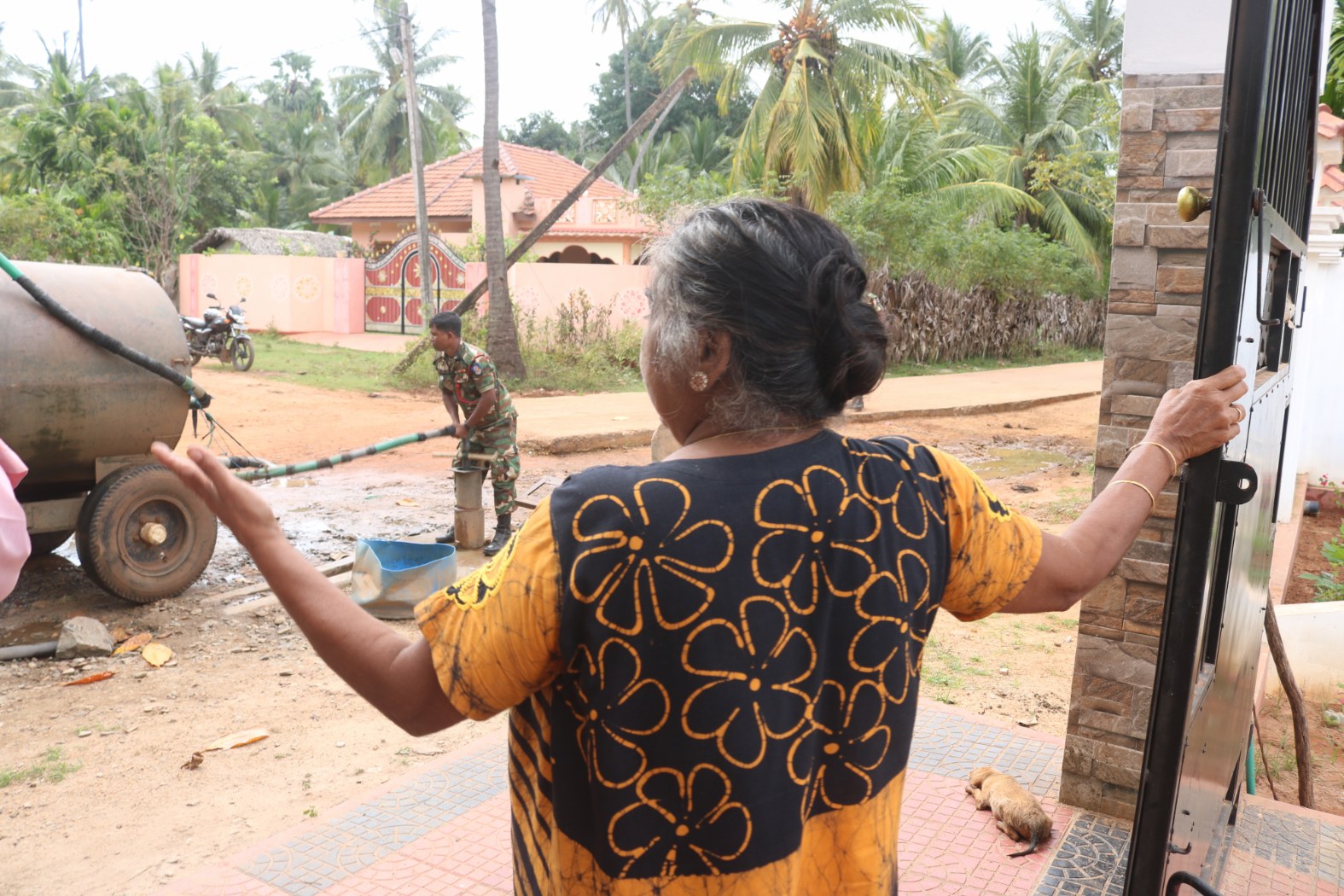
The governor of the Northern province admitted that the Sri Lankan military was causing environmental damage by exploiting Mullaitivu ground water.
The remarks came at a meeting of the district development committee last week when Governor Suren Raghavan was told about the Sri Lankan army extracting millions of litres of water daily from a tube well in Karaithuraipatru (Maritimepattu).
“Ground water must be protected,” the governor reportedly said at the meeting. “That water belongs to the future. Whether it’s the army or a large private corporation, no-one should be allowed to drain our water sources.”
Tensions have been ongoing in Kanukkeni, the area served by the mentioned well, as residents have accused the army of polluting the village, particularly its alternative water sources, with heavy vehicles and tankers.
While some residents said their native water sources had been too contaminated to use and they were forced to buy drinking water, it emerged earlier this month that over 13000 families have been affected by drought in the Mullaitivu district.