Ahed al-Tamimi has been in Israeli custody since 20 December after she and her cousin were filmed confronting soldiers
Israeli lawyer Gaby Lasky speaks with her client Ahed Tamimi in the military court at Ofer prison on Monday (AFP)
Monday 1 January 2018
Israel on Monday indicted Ahed Tamimi, the Palestinian teenager arrested after a video in which she and her cousin confronted two Israeli soldiers in the occupied West Bank went viral.
Tamimi was indicted on charges including assault for punching an Israeli soldier in the face two weeks ago, an incident which made her into a hero for Palestinians and was seen as humiliating by right-wing Israelis.
Israeli authorities are pursuing a total of 12 charges against Tamimi, her lawyer said on Monday.
The lawyer, Gaby Lasky, spoke to journalists ahead of the hearing in a military court, saying the charges include assault and relate to six different incidents.
The accusations also include stone-throwing, incitement and making threats, Lasky said.
Prosecutors are also seeking five charges against her mother Nariman, and had on Sunday filed charges against her cousin Nour, 20.
Nour Naji al-Tamimi was arrested on 20 December after she and Ahed were filmed on a mobile phone slapping, kicking and hitting the soldiers in their village of Nabi Saleh. The soldiers were armed with M16 guns, helmets and body armour.
Nour al-Tamimi was charged with aggravated assault of a soldier and disturbing soldiers carrying out their duties, according to charges filed at Ofer military court.
The soldiers, according to the charges, were in the Tamimi's yard to prevent Palestinians from throwing stones at Israeli motorists.
Bassem al-Tamimi, Ahed's father and an activist opposing the Israeli Halamish settlement in Nabi Saleh, has said that his daughter's actions came soon after Israeli soldiers shot her 14-year-old cousin, Mohammed, in the head.
"The IOF [Israeli Occupation Forces] raided my home and arrested my daughter Ahed Tamimi after the Israeli media attacked her after she stopped the soldier in front of our house when he shot a child in the head," he wrote.
Mohammed al-Tamimi, who was protesting against Trump's announcement on recognising Jerusalem as Israel's capital when he was shot on 15 December, was placed into a medically induced coma.
Between 5 and 18 December, the United Nations Office for the Coordination of Humanitarian Affairs (UNOCHA) recorded at least 345 cases of Palestinian children hurt by Israeli forces.
More than a third of these injuries were from live ammunition. In a report by Defence for Children International-Palestine (DCIP), six head injuries were documented as the most serious, including two children with permanent eye loss.
MANY observers of China’s escalating global programme of foreign investment and infrastructure development are crossing their fingers and hoping for the best.
In an ideal world, China’s unbridled ambitions will improve economic growth, food security and social development in many poor nations, as well as enriching itself. Such hopes are certainly timely, given the isolationism of the US Trump administration, which has created an international leadership vacuum that China is eager to fill.
But a close look reveals that China’s international agenda is far more exploitative than many realise, especially for the global environment. And the Chinese leadership’s claims to be embracing “green development” are in many cases more propaganda than fact.
To help steer through the maze, I provide here a snapshot of China’s present environmental impacts. Are China’s assertions reasoned and defensible, or something else altogether?
For a start, China is overwhelmingly the world’s biggest consumer of illegally poached wildlife and wildlife products. From rhino horn and pangolins to shark fins and a menagerie of wild bird species, Chinese consumption drives much of the global trade in wildlife exploitation and smuggling.
The author examining a Forest Elephant gunned down by ivory poachers in central Africa. Source: Mahmoud Mahmoud
But even before China’s ban has taken full force, a black market for ivory is developing in neighbouring Laos. There, Chinese entrepreneurs are churning out great quantities of carved ivory products, specifically designed for Chinese tastes and openly sold to Chinese visitors.
More damaging still are China’s plans for infrastructure expansion that will irreparably degrade much of the natural world.
China’s One Belt One Road initiative alone will carve massive arrays of new roads, railroads, ports, and extractive industries such as mining, logging, and oil and gas projects into at least 70 nations across Asia, Europe, and Africa.
China’s President Xi Jinping promises that the Belt and Road initiative will be “green, low-carbon, circular and sustainable”, but such a claim is profoundly divorced from reality.
A partial representation of China’s One Belt One Road scheme, circa 2015. Source: Mercator Institute for China Studies
As my colleagues and I recently argued in Science and Current Biology, the modern infrastructure tsunami that is largely being driven by China will open a Pandora’s box of environmental crises, including large-scale deforestation, habitat fragmentation, wildlife poaching, water pollution and greenhouse gas emissions.
China’s pursuit of natural resources is also escalating across Latin America. In the Amazon, for example, big mining projects – many of which are feeding Chinese industries – don’t just cause serious local degradation, but also promote widespread deforestation from the networks of roads bulldozed into remote areas to access the mines.
Beyond this, China is pushing to build a 5,000km railroad across South America, to make it cheaper for China to import timber, minerals, soy and other natural resources from ports along South America’s Pacific coast. If it proceeds, the number of critical ecosystems that would be impacted by this project is staggering.
A World Bank study of more than 3,000 overseas projects funded or operated by China revealed how it often treats poor nations as “pollution havens” – transferring its own environmental degradation to developing nations that are desperate for foreign investment.
Finally, much has been made of the fact that China is beginning to temper its appetite for domestic fossil-fuelled energy. It is now a leading investor in solar and wind energy, and recently delayed construction of more than 150 coal-fired electricity plants in China.
These are unquestionably pluses, but they need to be seen in their broad context. In terms of greenhouse-gas emissions, China has exploded past every other nation. It now produces more than twice the carbon emissions of the United States, the second-biggest polluter, following the greatest building spree of coal, nuclear, and large-scale hydro projects in human history.
Despite its new post-Trump role as the world’s de facto climate leader, China’s overall agenda could scarcely be described as green.
A tiger relaxes along a grassy bank. Matt Gibson/Shutterstock
Some would say it’s unfair to criticise China like this. They would argue that China is merely following a well-trodden path of exploitative development previously forged by other nations and colonial powers.
Xi admits that many Chinese corporations, investors and lenders operating overseas have often acted aggressively and even illegally overseas. But he says his government is powerless to do much about it. The most notable government response to date is a series of “green papers” containing guidelines that sound good in theory but are almost universally ignored by Chinese interests.
Xi speaks during the opening of the 19th National Congress of the Communist Party of China at the Great Hall of the People in Beijing. Source: Reuters/Aly Song
Are Xi’s assertions of powerlessness believable? He increasingly rules China with an iron hand. Is it really impossible for China to guide and control its overseas industries, or are they simply so profitable that the government doesn’t want to?
Of course, China’s huge international ambitions will have some positive effects, and could even be economically transformative for certain nations. But many other elements will benefit China while profoundly damaging our planet.
By Bill Laurance, Distinguished Research Professor and Australian Laureate, James Cook University. Originally published on The Conversation.
South Koreans watch a news broadcast of North Korean leader Kim Jong Un's annual New Year's Day speech, at the Seoul Railway Station in Seoul. (Lee Jin-man/AP) By Simon DenyerJanuary 1 at 3:24 AM
BEIJING — North Korean leader Kim Jong Un boasted in an annual New Year’s Day speech Monday that he had a nuclear button on his desk and that the entire United States was within range of his weapons — but he also vowed not to attack unless threatened.
Kim promised to focus this year on producing nuclear warheads and missiles for operational deployment. But he also struck a conciliatory note, opening the door to dialogue with South Korea and saying he would consider sending a delegation to the Winter Olympics to be held in his southern neighbor in February.
“The United States can never fight a war against me and our state,” he said in the nationally televised speech. “It should properly know that the whole territory of the U.S. is within the range of our nuclear strike and a nuclear button is always on the desk of my office, and this is just a reality, not a threat.”
But Kim also said that North Korea was a peace-loving and responsible nuclear power, and would not use its nuclear weapons unless “hostile aggression forces” encroach on its sovereignty or interests.
“This year, we should focus on mass-producing nuclear warheads and ballistic missiles for operational deployment,” Kim said. “These weapons will be used only if our security is threatened.”
North Korea's rapid advancement of its ICBM program.(The Washington Post)
North Korea conducted its sixth and most powerful nuclear test in September and launched its most high-tech intercontinental ballistic missile in November, ignoring international condemnation and steadily tightening sanctions.
In typically bellicose language, it declared the latest round of United Nations sanctions imposed last month an “act of war,” and Kim said his country had achieved the historic feat of “completing” its nuclear forces.
North Korea’s nuclear capabilities do not yet match Kim’s boasts, experts say, since it is far from clear it could successfully deliver a nuclear weapon on one of its missiles. Yet there is little doubt its capabilities have advanced significantly in the past year.
But Kim, dressed in a Western-style gray suit and tie, also offered a potential olive branch to Seoul, saying it is imperative to lower military tensions on the Korean Peninsula and improve ties with the South.
He said that the path to dialogue was open and that he would consider sending a delegation to the Winter Olympics in Pyeongchang, South Korea.
“North Korea’s participation in the Winter Games will be a good opportunity to show unity of the people, and we wish the Games will be a success,” he said. “Officials from the two Koreas may urgently meet to discuss the possibility.”
South Korea has been trying to reassure the rest of the world that the Olympics will be safe despite the nuclear tensions, and President Moon Jae-in has said North Korea’s participation would ensure their safety. He also proposed last month that Seoul and Washington postpone annual joint military drills until after the Olympics, and he generally takes a less-confrontational approach to relations with the North than his predecessor, Park Geun-hye.
John Delury, a professor of international relations at Yonsei University in Seoul, said Kim’s message to Seoul was “more promising” than he had anticipated, addressing in a specific and actionable way South Korea’s desire to make the Games a success.
“That should give hope to those in the South who are trying to get something going and open a channel at least,” he said.
The idea of improving relations between the two Koreas is one that is frequently spoken about but seldom achieved, and Kim’s warmer words could also be seen as an attempt to drive a wedge between Seoul and Washington.
While Kim’s words were more combative toward the United States, he also refrained from a personal attack on President Trump, after the two men engaged in several rounds of mutual name-calling in 2017, Delury noted.
When asked about North Korea’s nuclear claims Sunday night, Trump said only, “We’ll see, we’ll see.”
Daryl Kimball, executive director of the Arms Control Association, said Kim’s claims about his country’s nuclear capability underscored that there was no viable “military solution” to denuclearizing North Korea and that sanctions alone would not persuade Pyongyang to halt or reverse its nuclear buildup.
“To avoid a nuclear conflict and the full-scale deployment of an operational North Korean strategic deterrent force, U.S. leaders, in concert with South Korea, should redouble efforts to engage North Korea in direct talks and cease any further explicit or implicit threats of military action against the North,” he said in an email.
“The upcoming Olympics provide an important opportunity to break the ice and to begin discussions with the North Koreans on mutual steps that reduce the chances of miscalculation and war,” he added.
WASHINGTON (Reuters) - U.S. President Donald Trump said on Monday the United States has “foolishly” handed Pakistan more than $33 billion in aid over the last 15 years while getting nothing in return and pledged to put a stop to it.
“They give safe haven to the terrorists we hunt in Afghanistan, with little help. No more!” Trump wrote on Twitter. “The United States has foolishly given Pakistan more than 33 billion dollars in aid over the last 15 years, and they have given us nothing but lies & deceit, thinking of our leaders as fools.”
It was not immediately clear what prompted Trump’s criticism of Pakistan but he has long complained that Islamabad is not doing enough to tackle Islamist militants.
SPONSORED
The New York Times reported on Dec. 29 that the Trump administration was “strongly considering” whether to withhold $255 million in aid to Pakistan.
It said U.S. officials had sought but been denied access to a member of the Taliban-linked Haqqani network captured in Pakistan who potentially could provide information about at least one American hostage.
Pakistan’s foreign minister, Khawaja M. Asif, wrote on Twitter: “We will respond to President Trump’s tweet shortly inshallah...Will let the world know the truth..difference between facts & fiction.”
The Trump administration said in August that it was delaying sending the $255 million in aid to Pakistan. Last month, Trump said in a speech the U.S. government makes “massive payments every year to Pakistan. They have to help.”
Pakistan counters that it has launched military operations to push out militants from its soil and that 17,000 Pakistanis have died fighting militants or in bombings and other attacks since 2001.
Michael Kugelman, senior associate for South Asia at the Woodrow Wilson Center, cautioned that people should not “overstate the significance of Trump’s tweet for policy.”
Trump in October tweeted that U.S. relations with Pakistan were improving, but Kugelman said “they most certainly did not improve.”
“Still, this is an administration that has repeatedly vowed to take a harder line and has strongly considered an aid cut. So was Trump’s tweet meant to preview a coming shift in policy? I’d certainly bet on the possibility,” Kugelman said.
The top U.S. general in Afghanistan, John Nicholson, said in November that he had not seen a change in Pakistan’s behavior toward militants, despite the Trump administration’s tougher line against Islamabad.
In a speech last month in Afghanistan to U.S. troops, Vice President Mike Pence said “for too long Pakistan has provided safe haven to the Taliban and many terrorist organizations, but those days are over. President Trump has put Pakistan on notice.”
Hamdullah Mohib, Afghanistan’s ambassador in Washington, said in a Twitter posting on Monday that Trump’s tweet was a “promising message to Afghans who have suffered at the hands of terrorists based in Pakistan for far too long.”
The Pakistan embassy in Washington did not immediately respond to a request for comment on Monday.
The White House did not respond to requests on what prompted Trump’s tweet and whether a decision had been made on the aid.
I used to be a smart-alecky conservative who scoffed at “political correctness.” The Trump era has opened my eyes.
Men wave rainbow and 'black lives matter' flags while marching in the annual LGBTQI Pride Parade on June 25, 2017 in San Francisco. (Elijah Nouvelage/Getty Images)
BYMAX BOOT-
DECEMBER 27, 2017, 1:55 PM
In college — this was in the late 1980s and early 1990s at the University of California, Berkeley — I used to be one of those smart-alecky young conservatives who would scoff at the notion of “white male privilege” and claim that anyone propagating such concepts was guilty of “political correctness.” As a Jewish refugee from the Soviet Union, I felt it was ridiculous to expect me to atone for the sins of slavery and segregation, to say nothing of the household drudgery and workplace discrimination suffered by women. I wasn’t racist or sexist. (Or so I thought.) I hadn’t discriminated against anyone. (Or so I thought.) My ancestors were not slave owners or lynchers; they were more likely victims of the pogroms.
I saw America as a land of opportunity, not a bastion of racism or sexism. I didn’t even think that I was a “white” person — the catchall category that has been extended to include everyone from a Mayflower descendant to a recently arrived illegal immigrant from Ireland. I was a newcomer to America who was eager to assimilate into this wondrous new society, and I saw its many merits while blinding myself to its dark side.
Well, live and learn. A quarter century is enough time to examine deeply held shibboleths and to see if they comport with reality. In my case, I have concluded that my beliefs were based more on faith than on a critical examination of the evidence. In the last few years, in particular, it has become impossible for me to deny the reality of discrimination, harassment, even violence that people of color and women continue to experience in modern-day America from a power structure that remains for the most part in the hands of straight, white males. People like me, in other words. Whether I realize it or not, I have benefitted from my skin color and my gender — and those of a different gender or sexuality or skin color have suffered because of it.
This sounds obvious, but it wasn’t clear to me until recently. I have had my consciousness raised. Seriously.
This doesn’t mean that I agree with America’s harshest critics — successors to the New Left of the 1960s who saw this country as an irredeemably fascist state that they called “AmeriKKKa.” Judging by historical standards or those of the rest of the world, America remains admirably free and enlightened. Minorities are not being subject to ethnic cleansing like the Rohingya in Burma. Women are not forced to wear all-enveloping garments as in Saudi Arabia. No one is jailed for criticizing our supreme leader as in Russia.
ABOUT THE AUTHOR
Max Boot is the Jeane J. Kirkpatrick senior fellow for national security studies at the Council on Foreign Relations. His forthcoming book is “The Road Not Taken: Edward Lansdale and the American Tragedy in Vietnam.”
The country is becoming more aware of oppression and injustice, which have long permeated our society, precisely because of growing agitation to do something about it. Those are painful but necessary steps toward creating a more equal and just society. But we are not there yet, and it is wrong to pretend otherwise. It is even more pernicious to cling to the conceit, so popular among Donald Trump’s supporters, that straight white men are the “true” victims because their unquestioned position of privilege is now being challenged by uppity women, gay people, and people of color.
I used to take a reflexively pro-police view of arguments over alleged police misconduct, thinking that cops were getting a bum rap for doing a tough, dangerous job. I still have admiration for the vast majority of police officers, but there is no denying that some are guilty of mistreating the people they are supposed to serve. Not all the victims of police misconduct are minorities — witness a blonde Australian woman shot to death by a Minneapolis police officer after she called 911, or an unarmed white man shot to death by a Mesa, Arizona, officer while crawling down a hotel hallway — but a disproportionate share are.
The videos do not lie. One after another, we have seen the horrifying evidence on film of cops arresting, beating, even shooting black people who were doing absolutely nothing wrong or were stopped for trivial misconduct. For African-Americans, and in particular African-American men, infractions like jaywalking or speeding or selling cigarettes without tax stamps can incite corporal, or even capital, punishment without benefit of judge or jury. African-Americans have long talked about being stopped for “driving while black.” I am ashamed to admit I did not realize what a serious and common problem this was until the videotaped evidence emerged. The iPhone may well have done more to expose racism in modern-day America than the NAACP.
Of course, the problem is not limited to the police; they merely reflect the racism of our society, which is not as severe as it used to be but remains real enough. I realized how entrenched this problem remains when an African-American friend — a well-educated, well-paid, well-dressed woman — confessed that she did not want to walk into a department store carrying in her purse a pair of jeans that she planned to give to a friend later in the day. Why not? Because she was afraid that she would be accused of shoplifting! This is not something that would occur to me, simply because the same suspicion would not attach to a middle-aged, middle-class white man.
The larger problem of racism in our society was made evident in Donald Trump’s election, despite — or because of — his willingness to dog-whistle toward white nationalists with his pervasive bashing of Mexicans, Muslims, and other minorities. Trump even tried to delegitimize the first African-American president by claiming he wasn’t born in this country, and now he goes after African-American football players who kneel during the playing of the anthem to protest police brutality. (Far from being concerned about police misconduct, which disproportionately targets people of color, Trump actively encouragesit.)
Adam Serwer argues persuasively in the Atlantic that Trump’s election could not be explained by “economic anxiety,” because the poorest voters — those making less than $50,000 a year — voted predominantly for Hillary Clinton. On the other hand, “Trump defeated Clinton among white voters in every income category,” from those making less than $30,000 to those making more than $250,000. In other words, Serwer writes, Trump does not lead a “working-class coalition; it is a nationalist one.” That doesn’t mean that every Trump supporter is a racist; it does mean that Trump’s victory has revealed that racism and xenophobia are more widespread than I had previously realized.
As for sexism, its scope has been made plain by the horrifying revelations of widespread harassment, assault, and even rape perpetrated by powerful men from Hollywood to Washington. The Harvey Weinstein scandal has opened the floodgates, leading to the naming and shaming of a growing list of rich and powerful men — including Kevin Spacey, Louis C.K., Charlie Rose, Matt Lauer, Roy Moore, and John Conyers — who are alleged to have abused their positions of authority to force themselves upon women or, in some cases, men.
As with the revelations of police brutality, so too with sexual harassment: I am embarrassed and ashamed that I did not understand how bad the problem is. I had certainly gotten some hints from my female friends of the kind of harassment they have endured, but I never had any idea it was this bad or this common — or this tolerated. Even now, while other men are being fired for their misconduct, Trump continues to sit in the Oval Office despite credible allegations of sexual assault from nearly 20 different women.
I now realize something I should have learned long ago: that feminist activists had a fair point when they denounced the “patriarchy” for oppressing women. Sadly, this oppression, while less severe than it used to be, remains a major problem in spite of the impressive strides the U.S. has taken toward greater gender equality.
This doesn’t mean that I am about to join the academic political correctness brigade in protesting “microaggressions” and agitating against free speech. I remain a classical liberal, and I am disturbed by attempts to infringe on freedom of speech in the name in fighting racism, sexism, or other ills. But I no longer think, as I once did, that “political correctness” is a bigger threat than the underlying racism and sexism that continue to disfigure our society decades after the civil rights and women’s rights movements. If the Trump era teaches us anything, it is how far we still have to go to realize the “unalienable Rights” of all Americans to enjoy “Life, Liberty and the pursuit of Happiness,” regardless of gender, sexuality, religion, or skin color.
With sound policymaking, effective leadership, and enough foresight, however can meet and defeat the challenges as well as the many more to come in the New Year 2018.
by Anwar A. Khan-
( December 31, 2017, Dhaka, Sri Lanka Guardian) If we are human beings, we probably use the beginning of every year to reflect on the past year, make decision and set resolutions for the New Year. It is a good thing to make resolutions, but it takes a good deal of discipline and commitment to get results that would be different and better than what we got last year. Catherine Pulsifer wrote, “The New Year symbolizes the ending of one year and the beginning of yet another. We celebrate this event, yet it is only a moment in time, like any other day. But it is also considered a time when new beginnings can happen. Be determined to have a Happy New Year!”
Despite all the success the country has achieved in recent years including 2017, new and old dangers – economic, political, and security-related – threaten to derail its progress. With sound policymaking, effective leadership, and enough foresight, however can meet and defeat these challenges as well as the many more to come in the New Year 2018. Diplomatic efforts should be more geared up for a peaceful repatriation of helpless Rohingya refugees to their own homeland with due honour and respect.
In the New Year’s foresight, Bangladesh’s growth initiatives may be overarching themes that place the country at the tipping point and we perceive to be key areas for intervention to keep Bangladesh on its current rising trajectory. This year’s format is different from years past, encompassing viewpoints from high-level policymakers, academics, and practitioners, as well as utilising visuals to better illustrate the paths behind and now in front of Bangladesh. Growth in Asia and elsewhere has shown that industrialisation is crucial to job creation, a value that has to be enshrined in the new sustainable development goals of Bangladesh. The country has witnessed remarkable improvements in poverty reduction in recent years, but persistent challenges in inequality, education, health, and violence, among others, still plague it. As the 2018 year may provide the opportunity to be a jumping-off point for strong policies and efforts to accomplish the desired goals. We understand the assortment of opportunities 2017 provides for supporting human development efforts and argues for the central role that better data plays in addressing them.
To explore the consequences of Bangladesh’s rapid urbanisation which historically has facilitated the country transition from a reliance on agriculture to industry and jobs. However, without strong policies to deliver services, finance and build infrastructure, and support the urban poor, Bangladesh’s rapidly growing cities and intermediate cities cannot deliver on their potentials. 2018 may see a number of governance milestones and obstacles, including national parliamentary elections with inclusive participations, and the march towards good governance. Any sort of violence, killing, vote-rigging, destruction… during the national parliamentary elections time shall have to be ruthlessly suppressed by the law and order controlling body of the government. People want peace and that has to be ensured. People do not want the anti-liberation forces and their mango-twigs to get any chance to fish out any benefits in the troubled waters during pre and post polls times. Your vote is your voice. Beware of that these ruffians must not come to power because Bangladesh is for Bangladesh’s people. Police department must bring the fugitive war criminals and convicted fugitive war criminals to justice. The ICT should be expanded in more than one solitary court to speed up the on-going trials of the war criminals for bringing them to justice.
The government should reflect on the country’s growth-governance puzzle and the complex institutional changes necessary to move from economic growth to economic transformation. Historically, urbanisation is a sign of economic prosperity. As a country underwent structural transformation, and its economy shifted from agriculture to manufacturing and industry, the composition of the population of the country shifted from being predominantly rural to predominantly urban. However, urbanisation in the Bangladesh’s context displays different characteristics from the ones witnessed in Asia and other countries. This growth demonstrates a great need for better urban management and institution building. Thus, if managed properly, the new emerging cities can produce several economic opportunities as cities offer economies of scale, which can be conducive to sustainable economic prosperity and improved human development.
The fact is that that everyone has a different idea about what the perfect song or mood to transition from one year to the next should be. This year has a litany of challenges on the socio-economic and political fronts like the previous years. After the national parliamentary polls, the majority party leader and his or her team should have successfully take over all the levers of power both at party level and in government and deliver good governance in all levels of administration…..But this is now water under the bridge and we can only hope our leaders will now address more pressing issues such as push upward the economy and dealing with bread and butter issues in a much more pragmatic manner that would put Bangladesh on its track aright as it marches towards prosperity.
Youth unemployment is another cause for concern because there are just too many unemployed university graduates whose numbers are swelling the ranks of the growing jobless people. Joblessness could be a recipe for social unrest and this could lead to despondence. We are hopeful 2018 will be better in terms of the number of jobs that will be created so that our youth and those who lost their jobs will be employed and that there will be more social harmony.
The winter this morning falls on the last of the fogbank and will wash it away. We can smell the grass again, and the torn leaves being eased down into the mud. The few loves we have been allowed to keep are still sleeping on the sky of Bangladesh. Here in the country, we walk across the fields with only a few young cows for company. Big-boned and shy, they are like girls we remember. Those girls are matured now. Like us, they must sometimes stand at a window late at night, looking out on a silent backyard, at one rusting lawn chair and the sheer walls of other people’s houses. They must lie down some afternoons and cry hard for whoever used to make them happiest, and wonder how their lives have carried them this far without ever once explaining anything. We don’t know why we are walking out here with our coats darkening and our boots sinking in, coming up with a mild sucking sound we like to hear. We don’t care where those girls are now. Whatever they have made of it they can have. Today we want to resolve many things. We only want to walk a little longer in the cold blessing of the wind, and lift our faces to it.
Emotions and excitement will be lifted up inside eyes and mouth widely grinning hands clap together anticipation rising going through the whole body. As we wait for the sunrise, we wait for a shimmering blue sea. We shall see a beautiful golden sun. And we believe it will set us free. We put our pens down greatness without sound; love without a doubt and a heart unbound; freedom of tongues is freedom of minds; and free air is freedom of lungs. We smoke though, temporary satisfaction for eternal sorrow; one more drag; confidence to load the mag up against our heads, we then resurrect ourselves with memories of something else. So, we are grinding again, making our way up the lane, but the cities big so we take a…
With the moon as the conductor, the symphony of lights begins. As the heavens open in anticipation, stars one by one come filing in with each rhythmic starlight flicker keeping in tune with the galaxy. Entire planets hold their breath in wonder from everlasting to everlasting nebula breeze. It all plays out in harmony keeping perfect 3-4 times and such beauty is not held by boundaries and seen and heard light years through time. The year 2018 should be to do good deeds. The winds of bearable and golden-like and sweet-note are on our heads. The winds of civility and refinements having good or auspicious marks; of commendable looks… good governance…gentleness of disposition…exquisite beauty or grace…quite consistence; very reasonable; judicious; fair; adequate; relevant; well-refined life shall prevail in our days; and we wish our readers, and people in general a glorified and restful festive season. Celebrate new life in the New Year 2018.
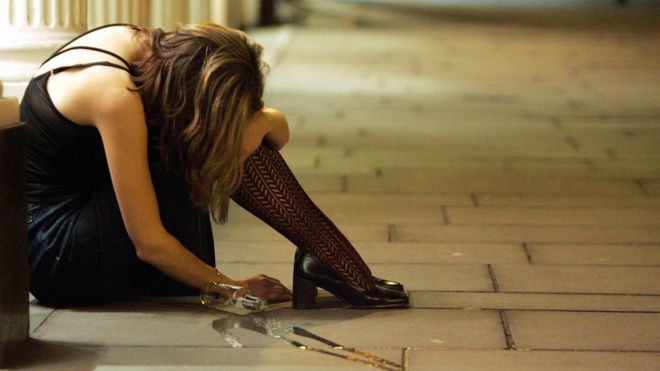
Drunk tanks may have to become the norm in towns and cities to keep "selfish" revellers out of A&E, the head of the NHS in England says.
Simon Stevens said he would be closely monitoring how the mobile units cope on New Year's Eve before deciding whether they should become a regular feature.
Drunk tanks provide a safe place for those who have over-indulged to be checked over and sleep it off.
They are often used over the festive period to stop people ending up at A&E.
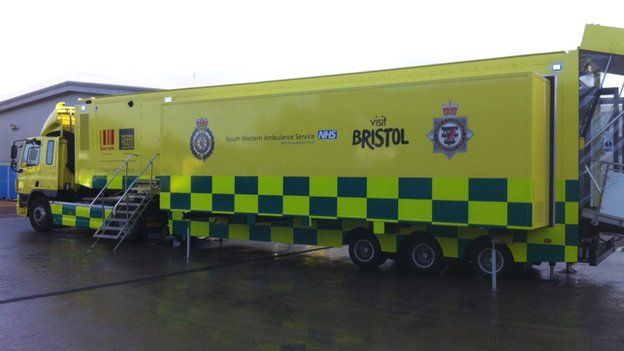
There are around 16 mobile units - also known as booze buses - across the UK, according to a recent survey, and a number of cities operate them all year round, including Newcastle, Cardiff, Manchester and Bristol.
Mr Stevens said he may start recommending others follow suit, given an estimated 15% of attendances at A&E are due to alcohol consumption.
This rises to about 70% on Friday and Saturday nights.
Image captionA number of cities have already introduced drunk tanks
He said he was thinking about the move after spending time with ambulance crews in London and the West Midlands in recent weeks.
"I've seen first-hand how paramedics and A&Es are being called on to deal with drunk and aggressive behaviour."
But Dr Katherine Henderson, a consultant in emergency medicine from Guy's and St Thomas' Hospitals, said it might be better to have a conversation about people drinking less on a night out.
She told the BBC: "By making this facility, it's like saying 'you can depend on the NHS to provide you with a safe place to sober up'".
"You're saying 'there's a safety net for you', rather than saying 'how are you going to get yourself and your friends home safely'?"
'Extremely drunk'
Dr Henderson also said she was concerned that NHS frontline staff were working in the mobile units, when "they could be helping others".
But she conceded that the last thing busy hospitals needed was more patients coming in to A&E.
"We are seeing people who are so intoxicated that they need to be on a trolley - which takes up a whole cubicle space; people who need cleaning up - which takes up a lot of nursing time; and people with serious injuries, who may be difficult to spot among the many that are extremely drunk.
"It's something we just don't need."
In Newcastle on a Friday and Saturday night, a Safe Haven van already operates to help vulnerable people - not just people who are drunk.
Dame Vera Baird, the Northumbria Police and Crime Commissioner, whose office part funds the van, said: "It's a safe location to help anybody who needs any support. It saves an enormous amount of money and time."
'Sleep it off'
Prof Simon Moore, from Cardiff University, is carrying out a study into the impact of different types of drunk tanks based in six cities in relieving pressure on the emergency services.
He said: "The very, very drunk with head injuries and similar will still need to go to A&E, but the health service is very risk-averse so they have a tendency to refer to A&E if they suspect something is wrong.
"So all you need is a good trained person - a paramedic or nurse - in the city centre to say 'we can hold off for a bit, this person is going to be fine in an hour or so', and then they can go home and sleep it off."
Prof Moore said it should be "a joined-up service" that refers people for treatment for their underlying drink problems.
In Northern Ireland, Belfast operates an NHS-run unit and an SOS bus, which helps anyone who is vulnerable.
In Scotland, there are no drunk tanks in operation and the government said they had no plans to introduce them.
How do drunk tanks work?
Bristol launched the UK's first drunk tank three years ago in a partnership between the police, ambulance and local hospital.
Known officially as an alcohol recovery centre, it is a state-of-the-art medical facility contained in a 60ft-long converted articulated lorry.
The vehicle has beds and seats as well as two showers. It comes with medical drips, oxygen, blood testing equipment and a pump system for the worst-affected revellers.
It is staffed by paramedics who provide basic treatment, although those who need it can still be sent to A&E.
Since it was launched, other cities including Manchester, Cardiff and Newcastle, have tried their own versions. The National Institute for Health Research is now looking at how effective they are at dealing with drunks. As the nation prepares to see in the new year, Simon Stevens reminded revellers to be responsible.
"When the health service is pulling out all the stops to care for sick and vulnerable patients who rightly and genuinely need our support, it's frankly selfish when ambulance paramedics and A&E nurses have to be diverted to looking after revellers who have overindulged.
"NHS doesn't stand for 'National Hangover Service'," he added.



 Men wave rainbow and 'black lives matter' flags while marching in the annual LGBTQI Pride Parade on June 25, 2017 in San Francisco. (Elijah Nouvelage/Getty Images)